The House of Representatives has mandated the Federal Ministry of Health and Social Welfare and the Country Coordinating Mechanism (CCM), Nigeria’s coordination platform for Global Fund grants, to submit all grant implementation plans to the National Assembly for approval before any donor funds are released.
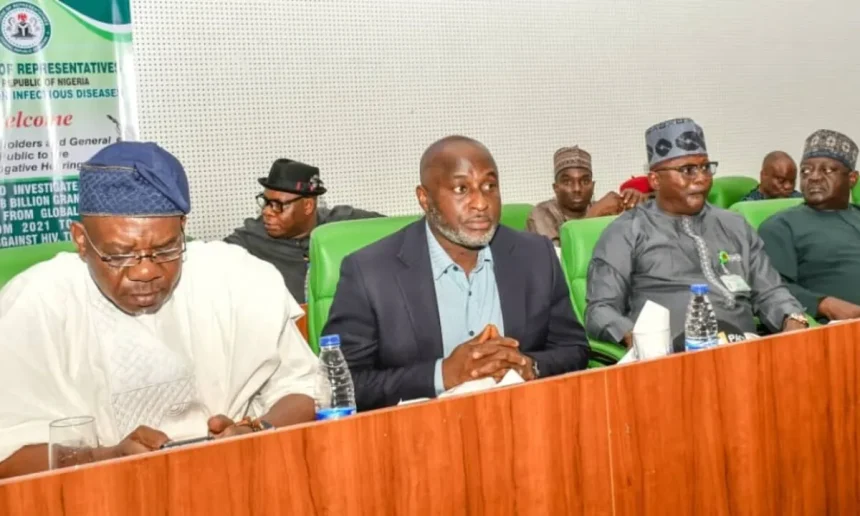
The resolution was reached at an investigative hearing by the House Committee on Infectious Diseases, chaired by Rep. Amobi Godwin Ogah, probing over $4.6 billion in grants received between 2021 and 2025 from the Global Fund and USAID for combating HIV/AIDS, Tuberculosis, and Malaria, and for strengthening Nigeria’s health systems.
Rep. Ogah stated that the Committee would collaborate with the Economic and Financial Crimes Commission (EFCC) and the Independent Corrupt Practices and Other Related Offences Commission (ICPC) to ensure accountability for all funds received by implementing entities.
“This is even more critical when you consider global concerns that, in some cases, poorly monitored donor funds have been exploited for illicit activities,” Ogah said.
He decried the lack of verifiable addresses for some implementing partners, calling it “unacceptable,” and emphasized that Nigeria must assert ownership over all donor-funded programmes.
“Any grant or assistance that excludes domestic participation or accountability mechanisms is no longer acceptable,” he declared. “We must demonstrate capacity to manage our health interventions effectively and gradually reduce overdependence on external grants.”
Declaring the session open, Speaker Rt. Hon. Abbas Tajudeen, PhD, GCON, represented by Deputy Chief Whip Rt. Hon. Ibrahim Ayokunle Isiaka, said the investigation reflects Parliament’s determination to ensure transparency and evidence-based oversight in public health financing.
Read Also: Reps Set to Probe NFF Over Alleged Misappropriation of $25m FIFA, CAF Grants
He expressed confidence that the probe would strengthen accountability and governance frameworks in Nigeria’s health sector.
The Coordinating Minister of Health and Social Welfare, Dr. Muhammad Ali Pate, welcomed the investigation, describing it as a necessary step toward transparency, accountability, and greater domestic ownership.
He noted that while donor assistance has saved millions of lives, Nigeria’s health spending remains below the 15% Abuja Declaration target, warning that continued reliance on external funding is unsustainable.
The hearing also discussed a proposal to amend the NACA Act, expanding its mandate and renaming it the National Agency for the Control of AIDS, Tuberculosis, and Malaria (NACATAM), a move aimed at unifying Nigeria’s infectious disease response.
The Committee commended the House Leadership for its support and reaffirmed its commitment to reducing preventable child deaths and aligning Nigeria’s health targets with the Sustainable Development Goals (SDGs).
This exercise, the statement said, reflects the 10th National Assembly’s unwavering commitment to fiscal responsibility, public accountability, and efficient governance in Nigeria’s health sector.