By Kabiru Abdulrauf
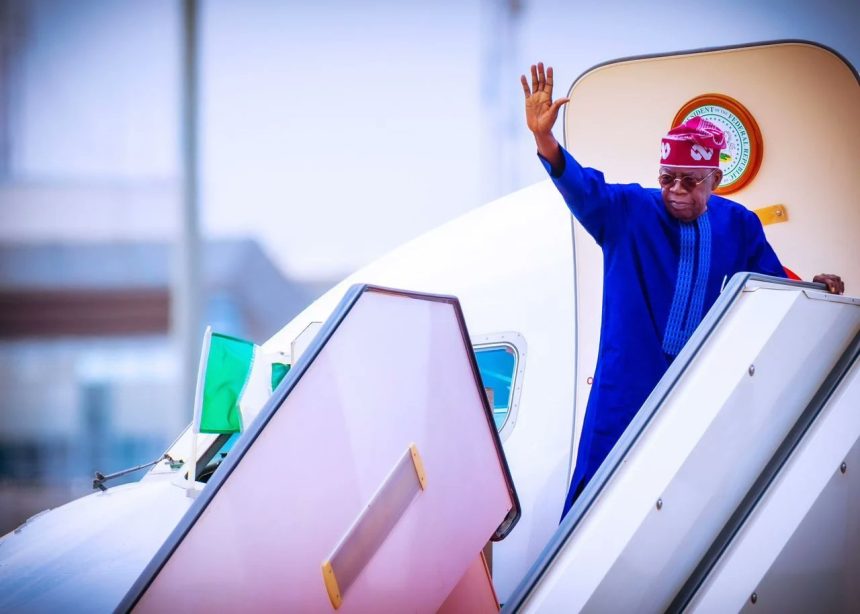
President Bola Ahmed Tinubu has departed Abuja for Rome, Italy, to participate in the Aqaba Process Heads of State and Government meeting, a global counter-terrorism initiative co-chaired by Jordan and Italy.
The Aqaba Process was launched in 2015 by King Abdullah II of Jordan to enhance coordination among global and regional partners in the fight against terrorism and violent extremism.
This year’s edition, hosted in Rome, brings together heads of state, top intelligence chiefs, defence ministers, and representatives of international organisations to discuss the worsening security situation in West Africa.
According to a statement by presidential spokesman Bayo Onanuga, the meeting will focus on the growing crime-terror nexus, the spread of jihadist movements from the Sahel to coastal states, and the rising cases of piracy in the Gulf of Guinea.
Participants will share assessments on emerging threats, develop joint strategies for land and maritime security, and explore how to counter online radicalisation and digital recruitment by extremist groups.
President Tinubu is expected to join discussions on regional collaboration and how African states can strengthen intelligence sharing, border control, and military coordination.
The President will also hold bilateral meetings with other leaders on the sidelines of the summit to explore joint approaches to addressing insecurity across the subregion.
Accompanying him are key members of his security and foreign affairs team, including the Minister of State for Foreign Affairs, Bianca Ojukwu; Minister of Defence, Mohammed Badaru; National Security Adviser, Nuhu Ribadu; and Director-General of the National Intelligence Agency, Mohammed Mohammed.
The Aqaba Process has become a crucial platform for nations facing terrorism threats to build common understanding and collective action.
For Nigeria, participation in the forum underscores President Tinubu’s commitment to regional security cooperation and his administration’s broader strategy to combat terrorism, piracy, and organised crime.
The meeting opens on October 14, with expectations that renewed international collaboration will help West Africa turn the tide against extremism and restore stability across the region.