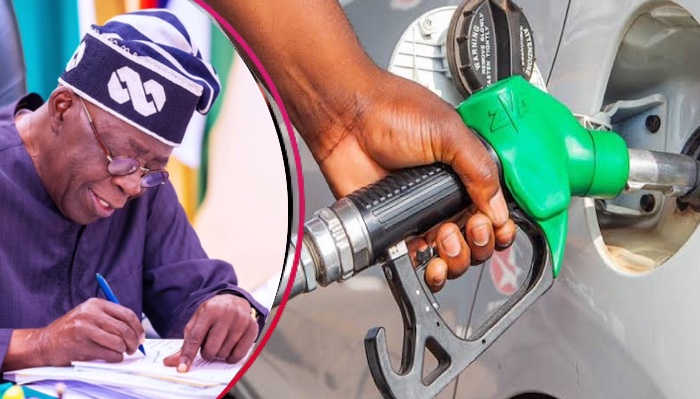
The Federal Government’s decision to impose a 15 percent import tariff on refined petroleum products has triggered another wave of fuel price hikes across Nigeria, with petrol now selling for over ₦1,000 per litre in several states, sparking public outrage and renewed debates over subsidy removal and economic hardship.
According to reports from filling stations nationwide, the price of Premium Motor Spirit (PMS) surged sharply within 48 hours of the tariff approval, with retailers citing higher import and logistics costs. In major cities like Lagos, Abuja, Port Harcourt, and Kano, petrol now sells between ₦980 and ₦1,150 per litre, depending on location and brand.
The development follows President Bola Ahmed Tinubu’s approval of a new 15 percent tariff on imported refined fuel products, a policy aimed at boosting government revenue and encouraging local refining. However, the move has sparked fears of worsening inflation, transport hikes, and declining purchasing power.
In a statement issued on Monday, a senior official from the Ministry of Finance confirmed the new tariff structure, noting that it is part of a broader fiscal reform under the 2025 Fiscal Policy and Tax Review Plan.
“The government’s objective is to create a fair market structure that encourages domestic refining and reduces overreliance on imports. The tariff will also help balance foreign exchange outflows and support the naira,” the official said.
The sudden increase in petrol prices has drawn sharp criticism from labour unions, economic analysts, and civil society groups who argue that Nigerians are already grappling with severe hardship following subsidy removal and currency devaluation.
The Nigeria Labour Congress (NLC) described the move as “a policy assault on the working poor,” warning that the government’s decision will deepen the cost-of-living crisis and push more families into poverty.
“Every new tariff or tax increase directly affects transport, food prices, and inflation. This is an insensitive move at a time when Nigerians are struggling to survive,” said Benson Upah, NLC’s spokesperson.
Similarly, the Major Oil Marketers Association of Nigeria (MOMAN) confirmed that the landing cost of fuel had risen significantly due to the new tariff and fluctuating exchange rates. “Retailers have no choice but to adjust pump prices upward. Without stable forex and local production, this volatility will persist,” MOMAN said in a press release.
Defending the tariff decision, Minister of Finance and Coordinating Minister of the Economy, Wale Edun, maintained that the reform is essential to attract investors into Nigeria’s refining and downstream sector.
“By adjusting the import tariff, we are incentivizing local production, particularly from the Dangote Refinery and other modular refineries,” Edun said. “This is not a punishment to Nigerians but a long-term step towards energy independence and fiscal balance.”
However, many Nigerians view the timing as poor, given the existing inflationary pressures and rising cost of transportation, electricity, and food.
Energy economist noted that while the tariff might promote local refining, its immediate impact on inflation could be devastating.
“Nigeria is in a fragile economic recovery phase. A sudden 15 percent tariff on fuel imports will ripple through every sector transport, manufacturing, and agriculture. It will push inflation beyond manageable levels,” he warned.
Analysts also argue that the government should have waited until domestic refining especially at the Dangote Refinery and Port Harcourt Refinery reached stable production before introducing new tariffs.
Across Nigeria, motorists and commuters expressed frustration as transport fares doubled overnight. In Abuja, a cab driver, lamented: “We are the ones paying for every government policy. If I buy fuel at ₦1,050 per litre, I have to increase fares it’s simple survival.”
In Lagos, market traders said they were already revising prices of goods to reflect higher transport costs. “Everything has gone up again tomatoes, rice, garri because trucks now buy fuel at over ₦1,000,” said a vendor at Mile 12 Market.
This development comes barely a year after the government officially ended fuel subsidies, promising that savings would be redirected to infrastructure, health, and education. Since then, petrol prices have more than tripled, while inflation has surged past 34 percent, according to National Bureau of Statistics (NBS) data.
Despite repeated assurances, local refining capacity remains low. The Dangote Refinery expected to process 650,000 barrels per day is still scaling production and struggling with crude supply issues.
While the 15 percent import tariff aligns with Nigeria’s long-term vision for self-sufficiency in fuel production, its short-term impact threatens to deepen economic pain for millions. Until local refineries operate at full capacity, analysts warn that Nigerians will continue to bear the brunt of volatile global oil prices, forex scarcity, and policy shocks.