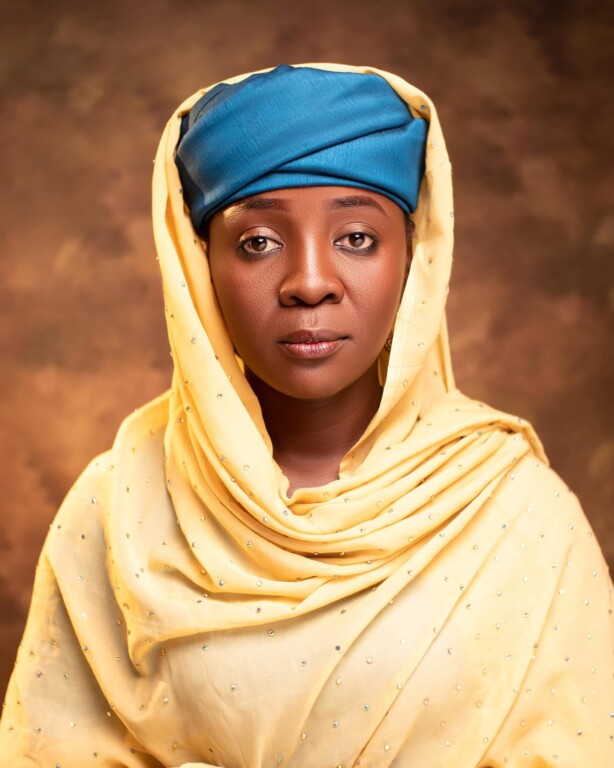
Political analyst Zainab Buba Galadima has warned that Northern Nigeria is facing a deepening leadership and succession crisis driven by weak institutional continuity and the collapse of long-term development planning.
In a policy commentary titled Northern Nigeria at the Crossroads: Leadership, Succession, and the Question of Survival, Galadima said the region’s leadership challenge is not the absence of prominent political figures but the lack of structured mentorship, ideological cohesion and succession frameworks capable of sustaining governance beyond individual tenures.
She traced the region’s leadership foundation to the post-independence era under figures such as Sir Ahmadu Bello, Sir Abubakar Tafawa Balewa, Aminu Kano and Joseph Tarka.
Noting that governance during that period emphasized regional cohesion, economic productivity, education and institution-building.
According to her, institutions such as the Northern Nigeria Development Corporation (NNDC), Ahmadu Bello University and regional marketing boards played critical roles in funding industrial growth.
Furthermore, she said emphasized on scholarship programs and public sector employment through revenue generated from agricultural exports including cotton, groundnuts, hides and skins.
Read Also: Edo Assembly Summons Natasha Irobosa Over Viral Videos
She said these systems weakened following the 1966 military coup and the collapse of the First Republic, adding that prolonged military rule centralized power and dismantled regional economic autonomy.
The abolition of marketing boards during the Structural Adjustment Programme in the late 1980s further eroded the North’s production-driven economy, shifting political priorities toward dependence on federal allocations.
Galadima also criticized the region’s political strategy between 2003 and 2015, particularly the consolidation of support around former President Muhammadu Buhari.
She argued that while Buhari was widely perceived as a symbol of integrity, his administration did not establish institutional succession frameworks or leadership development structures for the region.
She identified several Northern political figures with governance experience and national influence, including Atiku Abubakar, Rabiu Musa Kwankwaso, Kashim Shettima, Babagana Zulum, Nasir El-Rufai, Aminu Tambuwal, Ahmad Lawan and Bukola Saraki, among others.
However, she noted that these leaders operate largely in isolation rather than as part of a coordinated regional leadership bloc.
Galadima said Northern Nigeria continues to experience infrastructure decay, rising poverty levels, security challenges and declining education standards, despite producing a significant share of Nigeria’s political leadership.
She attributed the situation to mismanagement of public resources and the abandonment of agriculture value chains, textile manufacturing and vocational education.
She further warned that the region remains vulnerable to future national instability, citing poverty, porous borders, arms proliferation and food insecurity as major risk factors.
To reverse the decline, Galadima called for the development of a unified Northern reform agenda focused on human capital development, security sector reform, regional economic revitalization, leadership mentorship institutions, civic responsibility and intergenerational leadership pipelines.
She emphasized that the 2027 general elections represent a critical turning point for the region, urging political elites to prioritize long-term regional stability over personal ambition.
According to her, the future of Northern Nigeria will depend on whether current leaders commit to rebuilding institutional governance structures or allow continued fragmentation and decline.