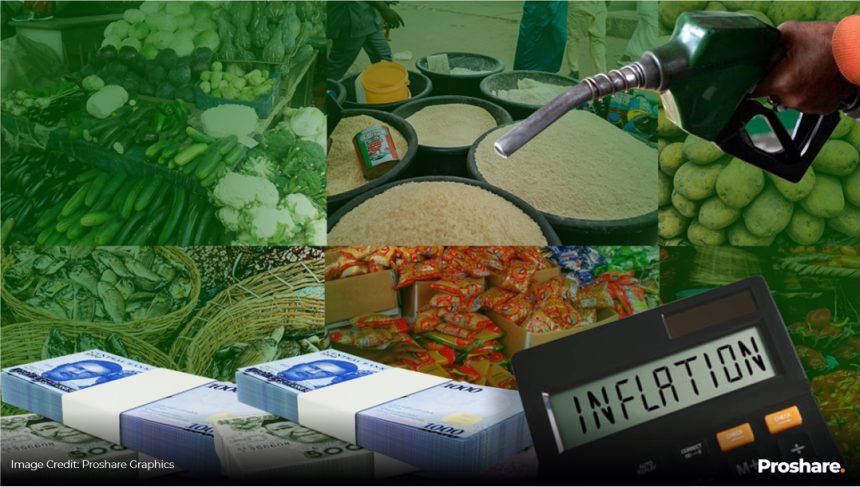
Nigeria’s headline inflation rate dropped to 18.02 percent in September 2025, marking the sixth consecutive month of decline and the lowest level in over three years, according to data released by the National Bureau of Statistics (NBS).
The new figure represents a significant drop from 20.12 percent in August, as reported in the NBS Consumer Price Index (CPI) released on Tuesday. The statistics agency said the decline reflects an easing in both food and core inflation components, driven by improved agricultural output, moderated exchange rates, and ongoing monetary adjustments.
According to the NBS, food inflation which has been the main driver of rising prices declined to 16.87 percent year-on-year, down from 19.33 percent recorded in August. The report also noted that core inflation, which excludes volatile items such as food and energy, dropped to 19.53 percent from 20.45 percent.
Month-on-month, prices increased by 0.72 percent, slightly lower than the 0.74 percent recorded in August, indicating a gradual slowdown in the rate of increase in goods and services.
The Bureau stated, “This consistent decline in the inflation rate over the past six months indicates the positive impact of recent fiscal and monetary measures implemented by the government and the Central Bank of Nigeria (CBN).”
For millions of Nigerians grappling with a prolonged cost-of-living crisis, the drop in inflation offers a brief moment of relief. However, analysts warn that despite the decline, inflation remains high enough to continue squeezing household incomes and purchasing power.
An economist with Afrinvest Consulting, Dr. Olufemi Adesina, said the slowdown is encouraging but fragile.
“The easing of inflation to 18.02 percent is a welcome development, but it’s not yet a victory. Food prices are still high, and real incomes have not improved significantly. Nigerians need sustained stability, not temporary dips,” he said.
A Lagos-based trader, Aisha Suleiman, expressed mixed feelings about the news.
“Yes, inflation has dropped, but the price of rice, garri, and bread is still high. We hear the numbers, but we don’t feel it in the market,” she said.
The Central Bank of Nigeria (CBN) recently cut its Monetary Policy Rate (MPR) by 50 basis points to 27 percent, marking the first rate cut since 2020. The move was a response to what the apex bank described as “consistent disinflation and improved foreign exchange stability.”
A CBN official, who preferred not to be named, said the policy shift was designed to “strike a balance between curbing inflation and supporting economic growth.”
He added, “We are closely monitoring the effects of our monetary stance. Our objective is to consolidate the current gains and ensure that inflation remains on a downward path.”
The CBN also attributed part of the improvement to increased agricultural productivity during the harvest season, as well as stable fuel supply following the government’s renewed partnership with local refineries.
Despite the positive report, experts caution that the battle against inflation is far from over.
According to the World Bank’s recent economic brief on Nigeria, food supply disruptions, insecurity in farming regions, and logistics costs remain key threats to price stability. The report warned that even a small disruption in supply chains could reverse the current progress.
An economist at the University of Abuja, said, “Eighteen percent inflation is still one of the highest in Africa. What this shows is that while inflation may be slowing, Nigeria still faces structural challenges such as low productivity, poor power supply, and unstable exchange rates.”
Some critics also argue that the recent rebasing of the Consumer Price Index (CPI) by the NBS may have contributed to the perception of faster improvement than citizens are experiencing on the ground.
“There is a difference between statistical disinflation and real relief,”
“The government must ensure transparency in data reporting to sustain public trust.”
On the streets, the story is different. For ordinary Nigerians, daily essentials remain expensive. Transport fares, housing rent, and energy costs continue to strain family budgets.
“I’ve reduced how often I cook with gas because it’s now too costly,” said Samuel Otu, a resident of Port Harcourt. “Even if inflation is falling, it doesn’t feel like anything has changed.”
Small and medium-scale business owners also say that while inflation may have slowed, the cost of production remains high due to fuel and electricity costs.
A manufacturer in Aba, said, “Banks are still charging high interest rates. Until credit becomes affordable, we can’t expand. Inflation dropping is good, but business conditions haven’t really improved.”
To sustain the downward inflation trend, economists recommend that the government focus on:
– Supporting agriculture and ensuring consistent food supply;
– Coordinating fiscal and monetary policies;
– Encouraging investment in power, manufacturing, and logistics; and
– Enhancing transparency in data and economic management.
They also warn that any increase in fuel prices or exchange rate volatility could reverse the current progress within months.
While Nigeria’s inflation rate dropping to 18.02 percent is a milestone worth noting, experts emphasize that the country must treat it as a window of opportunity rather than an end goal.
As one financial analyst put it, “This is the time to double down on reforms, not to relax. Inflation can rise faster than it falls if policies become inconsistent.”