
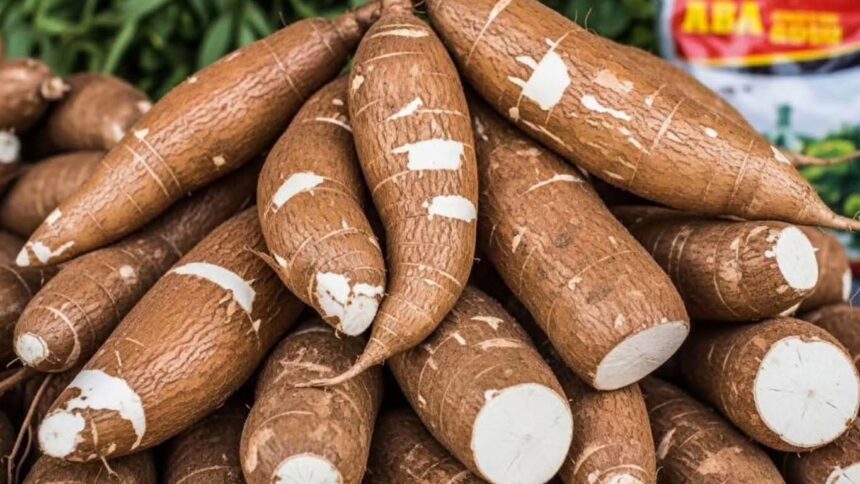
When it comes to cassava production, Nigeria reigns supreme. The West African nation produces over 60 million metric tons of this starchy root vegetable annually, accounting for approximately 20% of the world’s total output. This makes Nigeria not just Africa’s leader, but the undisputed global champion of cassava cultivation.
Cassava, known locally as “ege” in Yoruba or “akpu” in Igbo, is far more than an agricultural statistic for Nigeria. It’s a fundamental pillar of food security for millions of Nigerians. The crop thrives in Nigeria’s tropical climate and requires minimal inputs, making it accessible to smallholder farmers across the country. Its resilience to drought and poor soils makes it particularly valuable in a changing climate.
Nigerians transform cassava into numerous food products including garri (a granular flour), fufu (a dough-like staple), and tapioca. The crop also has industrial applications, from starch production to bioethanol fuel. The Nigerian government has invested in cassava processing facilities and export initiatives, recognizing its potential as both a food security tool and economic driver.
With its massive production capacity, Nigeria isn’t just feeding its own population of over 200 million people—it’s positioning cassava as a strategic crop that could address hunger challenges across Africa and contribute to the global food supply chain.