Updated Article
By Aisha Muhammad Magaji
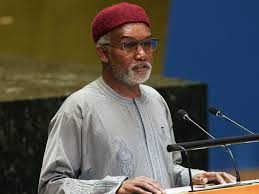
Nigeria has renewed its long-standing call for a permanent seat on the United Nations Security Council (UNSC) as world leaders gather for the 80th UN General Assembly (UNGA) in New York. The country’s Foreign Affairs Minister, Ambassador Yusuf Tuggar, announced the push as part of Nigeria’s diplomatic priorities for the session.
Africa’s Position
Minister Tuggar emphasised that the demand aligns with the Ezulwini Consensus and the Sirte Declaration, which call for at least two permanent and five non-permanent seats for Africa on the Security Council.
“Africa has a common position,” Tuggar said. “We must promote Nigeria’s case to become a permanent member of the UN Security Council. The continent deserves to have its voice heard in decisions that affect global peace and security.”
He added that Nigeria’s campaign is not only about national ambition but also about correcting “decades of under-representation of Africa at the world’s highest decision-making table.”
Broader Global Goals
The minister also highlighted Nigeria’s priority areas at UNGA80, including:
- Championing a Global Convention on Taxation, aimed at reforming global financial systems.
- Strengthening global cooperation on climate financing.
- Advocating for more inclusive governance of emerging technologies such as Artificial Intelligence.
“Our advocacy is simple: no global security without economic justice, no sustainable peace without inclusion,” Tuggar noted.
Shettima Leads Delegation
Nigeria’s Vice President Kashim Shettima is leading the delegation and is expected to deliver the country’s national statement later in the week. He will also participate in debates and side events, particularly those addressing counter-terrorism, food security, and financing for sustainable development.
Observers say Nigeria’s lobbying efforts will intensify through bilateral meetings and consultations on the sidelines, where the country hopes to secure endorsements from both African and non-African partners.
Why It Matters
Analysts believe Nigeria’s bid is part of a wider African push to reform multilateral institutions. With one of Africa’s largest economies, a population of over 200 million, and active contributions to peacekeeping, Nigeria argues it is well-placed to take up a permanent role.
However, experts caution that resistance from existing permanent members (the P5: the U.S., Russia, China, France, and the UK) remains a significant obstacle.
Next Steps
If Nigeria succeeds, it would be a historic breakthrough for Africa’s representation. But for now, the campaign remains a diplomatic test, requiring sustained lobbying and continental unity.