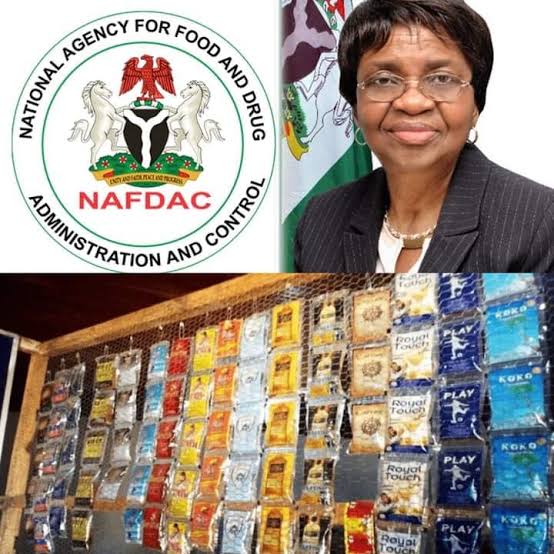
The National Agency for Food and Drug Administration and Control (NAFDAC) has announced that it will begin full enforcement of the ban on the production and sale of sachet and small-sized alcoholic drinks starting December 2025, as part of its effort to curb alcohol abuse and protect public health.
NAFDAC Director-General, Prof. Mojisola Adeyeye, confirmed the development in a press briefing in Abuja, emphasizing that the move follows a two-year transition period granted to manufacturers to phase out sachet and PET bottle alcoholic beverages below 200ml.
According to her, the enforcement is a continuation of the agency’s regulatory decision reached in 2022 in collaboration with the Federal Ministry of Health and other stakeholders. She explained that the measure aims to discourage easy access to high-concentration alcohol by underage individuals and vulnerable groups.
Prof. Adeyeye said, “The grace period given to manufacturers to liquidate their existing stock and adjust production lines has expired. From December, NAFDAC will commence full enforcement, and defaulters will face appropriate sanctions in accordance with the law.”
She added that enforcement teams across the country have been trained to monitor compliance at production sites, distribution chains, and retail outlets. The agency, she said, will also work closely with security agencies and consumer protection groups to ensure total compliance.
Reacting to concerns raised by industry stakeholders about job losses, Adeyeye stressed that public health remains a top priority. “We understand the economic implications, but we cannot trade the lives and well-being of our citizens for profit,” she noted.
The Distillers and Blenders Association of Nigeria (DIBAN), however, has appealed for an extension, arguing that the enforcement could affect over 50,000 direct and indirect jobs in the beverage sector. But NAFDAC insists that the industry had ample time to innovate and repackage products responsibly.
Public health advocates have lauded the agency’s decision, describing it as a bold step toward reducing alcohol-related harm, including road accidents, domestic violence, and addiction among young Nigerians.
As NAFDAC begins its enforcement drive in December, attention now shifts to how effectively the agency can balance public health priorities with industrial realities ensuring that the ban delivers its intended results without destabilizing the beverage sector.