A prominent civil society organisation has faulted the Kwara State Government and the State House of Assembly for failing to promptly publish the proposed 2026 budget, describing the conduct as a serious blow to transparency and democratic governance.
The Brain Builder’s Youth Development Initiative (BBYDI), in a statement signed by its Global Director, Olasupo Abideen, expressed concern that the state has repeatedly delayed releasing the budget to the public, despite commitments by the current administration to uphold open governance.
Abideen said the reluctance to proactively share the fiscal plan undermines citizens’ rights to access information and hampers meaningful public scrutiny of the government’s spending priorities. He noted that over the past three years, civil society organisations and ordinary residents often had to write formal letters or send repeated emails before the document was made available, a practice he described as “unacceptable in a democratic system.”
“A public budget is not a favour that should be granted upon request. It is the right of the people,” Abideen emphasised, adding that the failure to make the proposal publicly accessible raises serious questions about the government’s commitment to accountability.
The BBYDI also criticised the Kwara State House of Assembly for allowing the budget process to advance without ensuring that the document was placed in the public domain. The group urged lawmakers to suspend further legislative action on the budget until it is fully accessible.
The organisation urged residents, development partners and the media to demand greater transparency in the state’s budgeting process, saying that openness is foundational to effective and people‑centred governance.
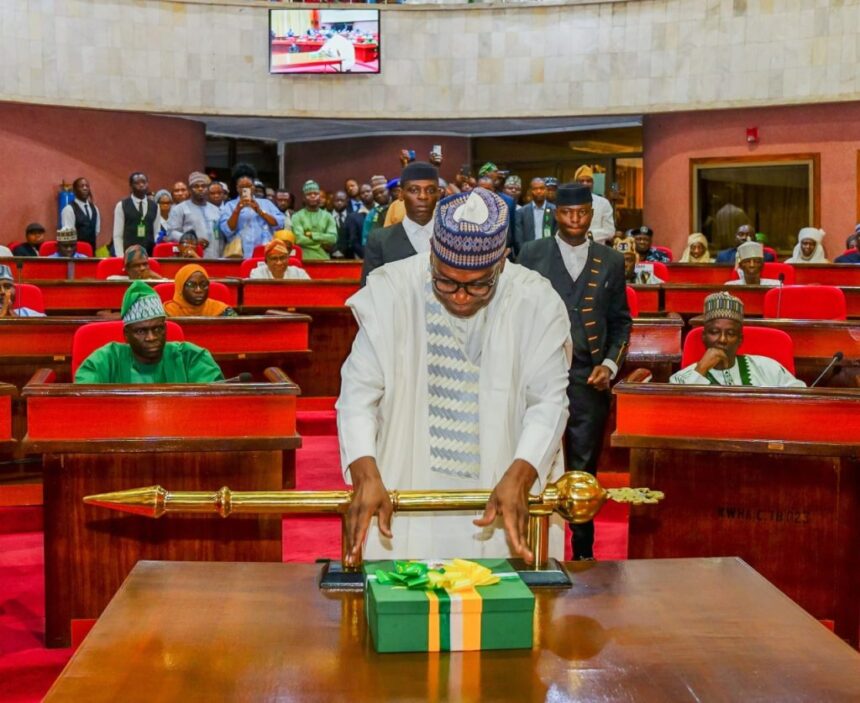
Governor AbdulRahman AbdulRazaq had presented the proposed 2026 budget, tagged the “Budget of Consolidation and Sustained Growth” to the State Assembly on December 22, 2025. The plan totals approximately ₦644.0 billion, allocating roughly 66 per cent to capital expenditure and 34 per cent to recurrent spending, with emphasis on infrastructure, security, worker welfare and social protection programmes.