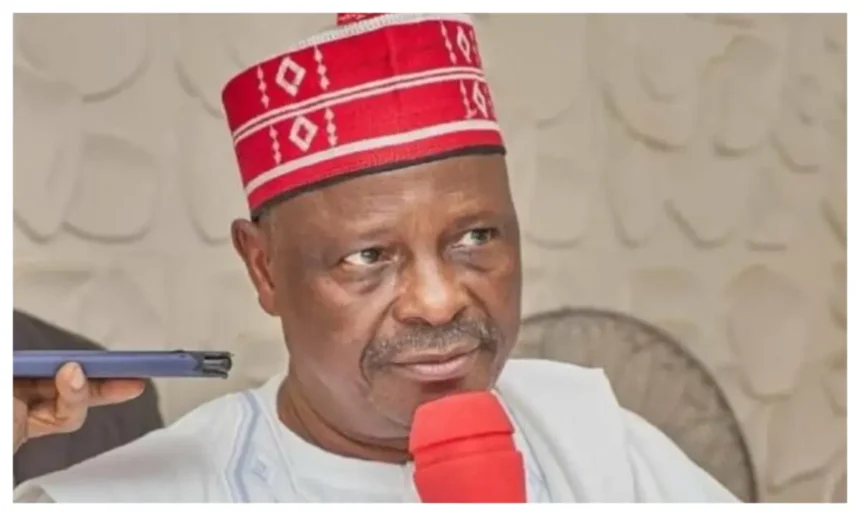
The New Nigeria Peoples Party (NNPP) and the Kwankwassiya movement have strongly rejected a proposed United States visa ban and asset freeze targeting their national leader, Senator Rabiu Musa Kwankwaso, calling the action unfair and politically driven.
Their response follows the introduction of a new bill in the US Congress that recommends sanctions over alleged violations of religious freedom in Nigeria.
The legislation, titled the Nigeria Religious Freedom and Accountability Act of 2026 (HR 7457), was introduced in the US House of Representatives by Representative Riley Moore and co‑sponsored by several other lawmakers.
It seeks to address claims of religious persecution in Nigeria by recommending targeted restrictions, including visa bans and asset freezes under the Global Magnitsky Human Rights Accountability Act against individuals, groups and certain Fulani militia organisations.
In an official statement from the NNPP’s national secretariat in Abuja, the party described the move as “contrived” and “selective judgment” singling out Kwankwaso, a former governor of Kano State and 2023 presidential candidate.
The party’s National Publicity Secretary, Ladipo Johnson, insisted that Kwankwaso has no record of religious extremism or intolerance and accused US lawmakers of targeting him for political reasons.
Johnson highlighted that other northern governors who introduced Sharia law in their states were not named in the proposed sanctions, raising questions about fairness and consistency.
He also pointed to Kwankwaso’s broader political history, including his 2023 presidential run with a Christian running mate and longstanding relationships with Christian leaders in Kano, as evidence that the allegations lack merit.
The Kwankwassiya movement, speaking through its spokesman Mansur Kurugu, said members reacted with shock and are still assessing the implications of the proposed sanctions.
The movement described the sanctions initiative as unjust and politically motivated, not based on credible evidence of wrongdoing.
Reactions from Kwankwaso’s supporters on social media reflect a mix of frustration and disbelief, with many questioning the motives behind the US legislative action and defending his record of peaceful political engagement.
Some supporters labelled the proposal as an attempt to undermine a prominent Nigerian opposition figure rather than a genuine human rights measure.
The US bill has drawn broader attention to concerns about religious freedom and security in Nigeria, but critics argue that sanctioning a high‑profile political leader without clear judicial findings could strain diplomatic ties and undermine due process.
Others say the legislation’s focus should be on addressing widespread violence affecting all communities in Nigeria rather than singling out individuals.
As the proposal moves through the US legislative process, both the NNPP and Kwankwassiya movement maintain that Senator Kwankwaso’s inclusion reflects political bias rather than substantiated evidence.
They have vowed to continue defending his reputation and await further developments before issuing more comprehensive responses.