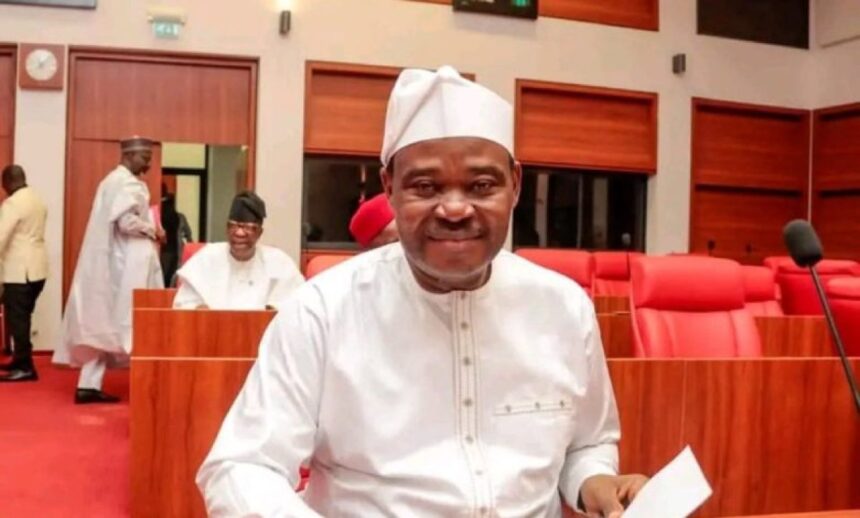
On March 6, 2026, President Bola Ahmed Tinubu appointed Jimoh Ibrahim as Nigeria’s Permanent Representative to the United Nations, one of 65 ambassadorial postings announced by the Presidency. The move was part of a broad diplomatic rollout following Senate confirmation of nominees in December 2025, assigning experienced lawmakers and public figures to key global missions.
Senator Ibrahim, who represented Ondo South Senatorial District in the National Assembly and held leadership roles in international parliamentary bodies, steps into a role where he will be tasked with advancing Nigeria’s interests, engaging in multilateral diplomacy, and contributing to discussions on global governance and security at the UN.
But while the focus falls on Nigeria’s voice at the world body, the name Jimoh Olanrewaju has also featured in a very different context, not on the global diplomatic stage, but in a high‑profile domestic court case involving alleged misuse of public funds.
From Public Finance to Courtroom Scrutiny: The Case of Aminu Jimoh Olanrewaju
In the ongoing trial of former Kogi State Governor Yahaya Bello on alleged ₦110.4 billion fraud and money‑laundering charges, witness testimony before the Federal High Court in Abuja confirmed that Aminu Jimoh Olanrewaju was one of the signatories to the Kogi State Government House Administration account.
The Economic and Financial Crimes Commission (EFCC) is prosecuting Bello and others for alleged misappropriation of state funds. During testimony, an Access Bank compliance officer told the court that Olanrewaju’s name appeared on bank documents linked to account transactions from the state government. The officer said the withdrawals, including tranches of ₦10 million, were within the Central Bank of Nigeria’s cash withdrawal limits, but confirmed Olanrewaju’s role as a signatory and described him as Director of Accounts in the Kogi State Government Administration.
However, that same witness also testified that the movements did not, on their face, breach cash withdrawal rules and did not specify illegal intent. The court has heard that several withdrawals were reported to the Nigerian Financial Intelligence Unit (NFIU) and that the purpose of some transactions ranged from the purchase of educational materials to agrochemicals, a point of contention as lawyers for Bello’s defence highlight compliance with banking guidelines.
A Separate Conviction Under the Law
Separately, public court records show that a man named Jimoh Olanrewaju (possibly unrelated to the Kogi matter but sharing the same name) was convicted on a fraud and impersonation charge in Lagos. In that case, the defendant pleaded guilty to criminal impersonation and obtaining money by false pretense and was sentenced to six months in prison or a fine of ₦200,000, along with an order to forfeit recovered items and sign a bond to steer clear of financial crimes.
It’s important to clarify that the Aminu Jimoh Olanrewaju mentioned in the Kogi funds case is referred to as a senior civil servant and account signatory, with no public record indicating a criminal conviction against him at this time. In contrast, the Lagos court conviction for impersonation and fraud involved a defendant of the same name in a separate legal matter.
These dual appearances of the name Jimoh Olanrewaju in public records and court proceedings illustrate two things: first, how officials and civil servants can be central figures in high‑profile public finance lawsuits that test the boundaries of compliance and mismanagement; and second, how the same name can appear in unrelated courts for different reasons showing the need for careful reporting and legal clarity.
As Nigeria takes its seat at the United Nations with Ambassador Jimoh Ibrahim leading its mission, debates about accountability, transparency, and governance, whether in lofty multilateral halls or in domestic courtrooms remain at the forefront of national discourse.