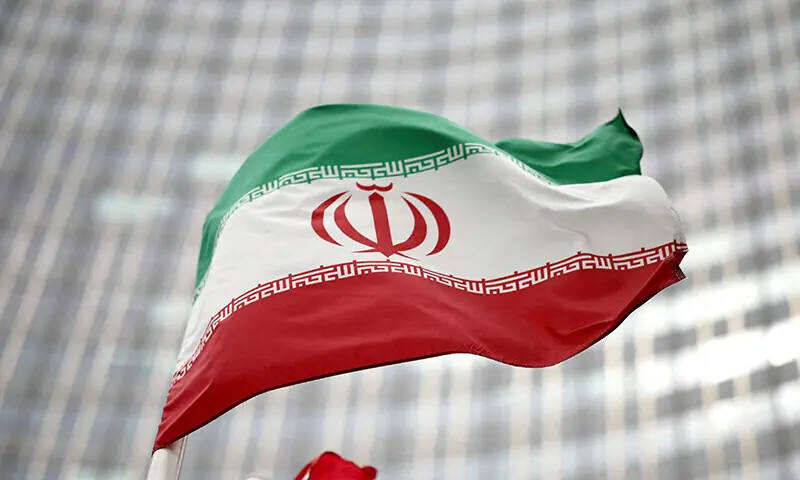
The Iranian government has announced that it is no longer bound by restrictions imposed under international agreements on its nuclear programme, citing what it described as “continued violations and non-compliance” by Western powers.
The declaration, made by Iran’s Foreign Ministry on Friday, marks a significant escalation in the country’s standoff with the United States and its allies over the future of the 2015 Joint Comprehensive Plan of Action (JCPOA) the landmark nuclear deal designed to limit Tehran’s nuclear activities in exchange for sanctions relief.
Israel and Hamas Agree to First Step in Trump’s Gaza Ceasefire Plan
In a statement carried by state television, the Foreign Ministry said, “Iran will no longer consider itself bound by any operational or technical limits set under previous agreements, given the persistent failure of the other parties to honour their commitments.”
Iran’s announcement comes amid renewed tensions in the Middle East following months of diplomatic stagnation. Western governments, particularly the United States, France, and the United Kingdom, have accused Tehran of expanding its uranium enrichment capacity beyond the limits prescribed in the JCPOA.
Tehran, however, insists that its nuclear programme remains peaceful, emphasizing that its advancements are meant for “scientific and energy purposes,” not for weapons development.
“Iran has the legitimate right to advance its peaceful nuclear technology,” the ministry added. “The era of unilateral compliance is over. Our patience has been exhausted.”
The move has sparked widespread concern among global powers. The U.S. State Department said it was “deeply troubled” by Iran’s latest declaration and warned of possible diplomatic and economic consequences if Tehran accelerates its uranium enrichment efforts.
The European Union also urged restraint, calling on Iran to return to full compliance and to engage constructively in renewed negotiations. EU foreign policy chief Josep Borrell said in a statement that the decision “undermines efforts to preserve peace and stability in the region.”
Meanwhile, Israel a longtime critic of Iran’s nuclear ambitions vowed to “act decisively” to prevent Tehran from obtaining nuclear weapons capability.
The JCPOA, signed in 2015 between Iran and six world powers (the U.S., U.K., France, Russia, China, and Germany), aimed to curb Iran’s ability to develop nuclear weapons in exchange for lifting economic sanctions.
However, the deal began to unravel after former U.S. President Donald Trump unilaterally withdrew from the agreement in 2018, reimposing severe sanctions on Iran. In response, Tehran gradually began breaching key commitments, enriching uranium at higher levels and installing advanced centrifuges.
The Biden administration had sought to revive the deal, but talks in Vienna repeatedly stalled over disputes about sanctions relief and Iran’s transparency obligations.
Analysts warn that Iran’s latest move could trigger a new wave of instability in the Middle East, increase oil market volatility, and further strain relations between Tehran and Western capitals.
Dr. Hamid Reza, a Middle East security analyst, noted, “This decision effectively signals the death of the JCPOA. Without a diplomatic breakthrough, we may see more aggressive posturing from both Iran and its rivals in the coming weeks.”
Iran maintains that it will continue to cooperate with the International Atomic Energy Agency (IAEA) under its safeguards agreement, though experts question how far that cooperation will extend if tensions escalate further.