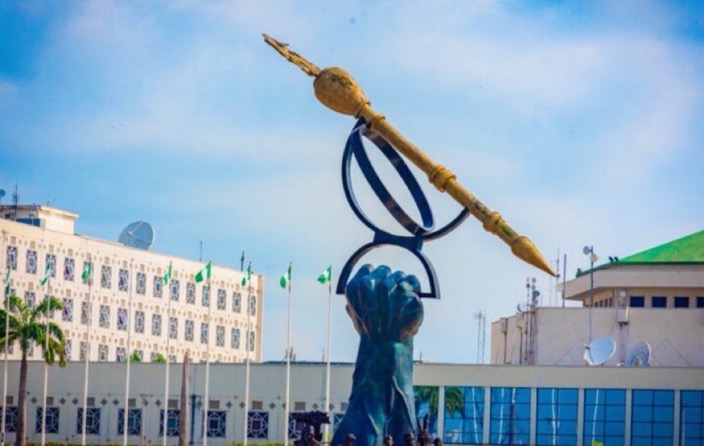
The House of Representatives on Tuesday suspended its plenary session following a protest staged by a group of indigenous contractors demanding the immediate payment of debts owed to them by various federal ministries, departments, and agencies (MDAs).
The peaceful protest, which took place at the entrance of the National Assembly Complex in Abuja, saw dozens of contractors carrying placards and chanting slogans accusing the Federal Government of neglecting local contractors while prioritizing foreign firms.
Security operatives were quickly deployed to the scene to maintain order as the demonstrators demanded an audience with key lawmakers, including the Speaker, Rt. Hon. Tajudeen Abbas. The contractors claimed that several of their projects completed and certified have remained unpaid for years, pushing many of them into financial distress.
According to one of the protesters, Mr. Musa Lawal, a contractor from Kaduna State, “We have been patient enough. Some of us executed contracts as far back as 2018, but till today we have not been paid. Many of our colleagues have died waiting for their money.”
Another contractor, Mrs. Gloria Eze, expressed frustration over what she described as systemic discrimination against indigenous firms. “The government says it wants to promote local content, yet it is killing small Nigerian businesses with non-payment. We borrowed money to execute these jobs, and banks are chasing us every day,” she lamented.
Inside the chamber, sources revealed that the leadership of the House resolved to suspend plenary to address the growing tension and to allow an emergency meeting between the House Committee on Public Accounts, the Ministry of Finance, and the protesting contractors’ representatives.
In a brief statement, the House spokesperson, Hon. Akin Rotimi Jr., said the suspension was a necessary step to avert further escalation and to “reaffirm the House’s commitment to transparency, accountability, and the protection of indigenous contractors who contribute to Nigeria’s infrastructural development.”
He added that the leadership of the House will work closely with relevant ministries to verify the authenticity of the contractors’ claims and to ensure legitimate debts are settled promptly.
The protest underscores growing concerns about Nigeria’s fiscal challenges and the ripple effects on local businesses executing public projects. Experts have warned that persistent government indebtedness to indigenous contractors could discourage participation in future public tenders, hinder employment creation, and slow economic recovery efforts.
Meanwhile, the Ministry of Finance has yet to issue an official response regarding the contractors’ demands, though sources within the ministry hinted that the government may introduce a phased payment plan in the coming weeks.
The suspension of plenary by the House of Representatives reflects the seriousness of the contractors’ grievances and the government’s broader fiscal pressures. As deliberations continue, Nigerians await concrete steps that will address the long-standing issue of unpaid public contracts — a recurring problem that continues to test the resilience of small and medium-scale enterprises in the country.