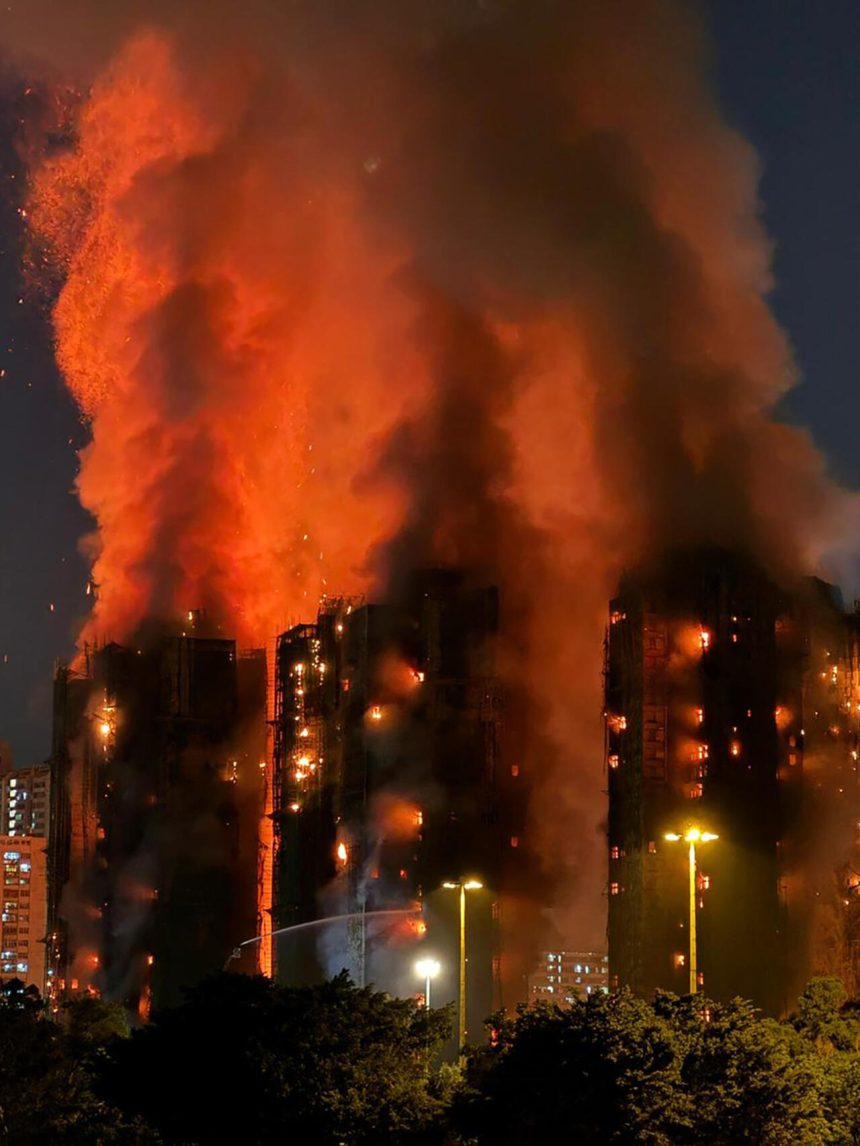
The devastating fire at Wang Fuk Court in Tai Po, Hong Kong, which claimed over 80 lives and left hundreds missing, is more than a tragic accident it is a mirror reflecting systemic negligence, urban vulnerability, and the consequences of ignoring public safety in high-density cities.
The fire swept through a high-rise residential block with astonishing speed. Investigations reveal that flammable bamboo scaffolding, plastic sheeting, and foam used during ongoing renovation work likely intensified the blaze. Many residents were trapped, and social media posts from witnesses painted a grim picture of chaos, smoke-filled corridors, and desperate evacuation attempts.
One resident tweeted, “We were told safety standards were followed, but the smoke came too fast, the stairs were blocked. It felt like the building was against us.” This sentiment has resonated widely, highlighting both fear and frustration at perceived lapses in oversight.
High-density urban living, while economically efficient, increases the stakes when safety is compromised. In buildings housing hundreds, a single lapse flammable materials, blocked exits, or delayed emergency response can become catastrophic.
Institutional Failures
The Hong Kong fire underscores multiple failures:
- Regulatory Oversight: Authorities must enforce strict building codes, yet inspections appear inadequate.
- Construction Practices: Cost-cutting measures and the widespread use of scaffolding nets, plastics, and foam contributed to rapid fire spread.
- Emergency Preparedness: Reports suggest that evacuation plans were either insufficient or poorly communicated, exacerbating casualties.
Experts on urban planning argue that “dense cities require redundancy in safety measures. Fire drills, sprinklers, and clear escape routes are non-negotiable.”
Platforms like Reddit, Twitter, and local forums have been awash with grief, outrage, and calls for accountability. Residents shared videos of panicked neighbors and emergency responders attempting to control the blaze. Public discourse emphasizes not just mourning, but demanding systemic reform.
While the fire is localized to Hong Kong, its lessons are universal. Many global cities face rapid urbanization without proportional investment in safety infrastructure. Ignoring building safety in high-density housing anywhere risks repeating tragedies.
From Lagos to Mumbai, cities with similar residential density and renovation practices face latent risks. Hong Kong’s fire should be a wake-up call: human life cannot be secondary to expedience or cost-saving.
This disaster is not inevitable. Steps to prevent future catastrophes include:
- Strict Enforcement of Building Codes: Regular inspections and transparent accountability.
- Fire Safety Investment: Sprinklers, alarms, and unobstructed evacuation routes.
- Community Engagement: Residents must be educated on fire safety and evacuation procedures.
- Legislative Oversight: Penalties for non-compliance with renovation and construction safety standards.
The Tai Po fire is a grim reminder that urban density, if unaccompanied by vigilance and robust safety infrastructure, is a recipe for disaster. Beyond grief, it is a call to action: governments, developers, and communities must prioritize safety over cost, regulation over convenience, and preparedness over negligence.
Lives lost in Hong Kong are not just statistics; they are a moral indictment of systemic neglect. The world must listen, learn, and act before the next disaster strikes elsewhere.