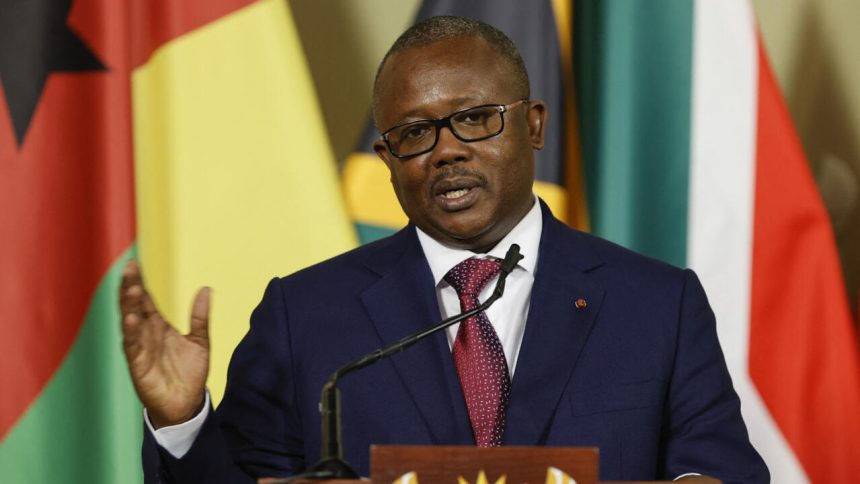
Guinea-Bissau has entered a new phase of political turmoil after President Umaro Sissoco Embaló abruptly left the country following a military takeover that saw senior officers announce a new national leadership structure. The dramatic development comes amid intensifying power struggles between the presidency and the military—tensions that have defined the West African nation’s fragile democracy for years.
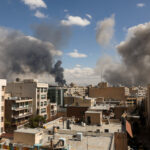
According to multiple sources in Bissau, armed soldiers seized control of key state institutions late Tuesday, including the presidential palace, national broadcaster, and major highways. By Wednesday morning, military officers appeared on state television to declare that they had taken charge “to restore stability and constitutional order”. An interim leader, understood to be a senior general, was appointed pending “national consultations”.
Reliable diplomatic sources confirmed that President Embaló departed Guinea-Bissau shortly after the military moved in, though details of his destination remain unclear. Government insiders say he left “for safety and consultation with regional partners,” but the military claims his exit proved he had “lost legitimacy”.
The presidency has not yet issued an official statement on the coup or the president’s departure, further deepening uncertainty among citizens.
Guinea-Bissau, a nation of just over 2 million people, has experienced more than 10 coups, attempted coups, and mutinies since independence in 1974. Civilian governments have repeatedly struggled to maintain control over powerful military factions, many of which operate autonomously.
The latest crisis follows a long-standing dispute between President Embaló and sections of the armed forces, who accuse him of authoritarian tendencies and attempting to undermine military autonomy.
Military: “We Are Saving the Nation”
In a televised address, the coup leaders justified their takeover by accusing the government of corruption, mismanagement, and endangering national security.
One senior officer said:
“The president has repeatedly violated the Constitution, destabilised institutions, and put the country at risk. The armed forces have intervened to save Guinea-Bissau.”
The military vowed to restore order, guarantee citizens’ safety, and prevent foreign interference.
Across Bissau, shops remained closed and streets were largely deserted as residents feared possible clashes between loyalist forces and the new military leadership. Many residents told local reporters they were staying indoors “until the situation becomes clearer”.
A resident in Bairro d’Ajuda told journalists:
“We woke up to soldiers everywhere. We don’t know who is in charge. We just want peace.”
Another citizen posted on social media:
“Our country is tired. The politicians and soldiers must stop this endless cycle.”
The Economic Community of West African States (ECOWAS) swiftly condemned the coup and announced that Guinea-Bissau had been suspended from the regional bloc pending restoration of constitutional order.
The West African organisation is expected to convene an emergency summit on the crisis.
ECOWAS leadership demanded:
- Immediate reinstatement of constitutional rule
- Protection of the president and his cabinet
- No harm to civilians
- Immediate release of detained officials
This marks the latest in a series of ECOWAS suspensions following coups in Niger, Mali, Burkina Faso, and Gabon in recent years.
The African Union called for calm and urged military leaders to “refrain from unconstitutional actions”, while UN Secretary-General António Guterres expressed concern over yet another breakdown of democracy in West Africa.
International observers warn that the region is facing a dangerous trend of military takeovers, weakened democracies, and rising political instability.
However, analysts warn that Guinea-Bissau’s political and military factions remain deeply fragmented.
Guinea-Bissau now stands on a knife’s edge as the military consolidates power and regional bodies push for a return to democratic rule. President Embaló’s departure adds a new layer of uncertainty to a country long plagued by coups and instability. All eyes remain on ECOWAS and the international community as they try to prevent yet another prolonged crisis in West Africa.