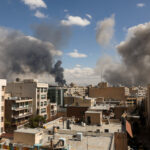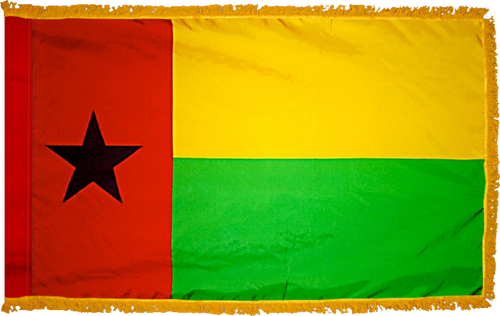
The recent military takeover in Guinea-Bissau, which saw General Horta N’Tam installed as transitional leader, is a stark reminder that fragile democracies remain vulnerable, and the ripple effects of political instability extend far beyond national borders.
On November 26, 2025, military officers seized power in Guinea-Bissau, suspending the constitution and halting the electoral process. The coup followed a contested presidential election, in which both major candidates claimed victory. The military cited election irregularities and political deadlock as justification, promising a one-year transitional period to restore “national security and public order.”
The immediate aftermath included:
- Curfews and roadblocks in the capital, Bissau.
- Closure of government offices and key institutions.
- Heightened anxiety among citizens, many fearing violence and repression.
Social media accounts from residents described “fearful streets,” empty markets, and a sense of uncertainty that permeates every aspect of daily life. One Twitter user posted, “We woke up to soldiers on our streets. Elections suspended. We are trapped between fear and uncertainty.”
The Cost of Institutional Weakness
Guinea-Bissau’s coup is emblematic of the risks that emerge when democratic institutions are weak or undermined:
- Erosion of Constitutional Norms: When the military assumes control, the rule of law is suspended, and citizens lose a mechanism for accountability.
- Citizen Vulnerability: Ordinary people bear the brunt, with livelihoods disrupted and political freedoms curtailed.
- Regional Instability: Neighboring countries, including Senegal and Nigeria, face heightened security risks and potential refugee flows.
Political analysts note that Guinea-Bissau has a long history of coups and political instability, highlighting the dangers of persistent weak governance structures and fragile institutions.
Regional bodies such as ECOWAS and the African Union condemned the coup, demanding a return to constitutional order and the release of detained political leaders. Nigeria, as a regional power, also voiced concern over the unconstitutional seizure of power, emphasizing that the situation could destabilize West Africa if left unaddressed.
Yet, international pressure often walks a fine line. Economic sanctions and diplomatic isolation may compel the military to negotiate, but they also risk further hardships for citizens already enduring political uncertainty.
Lessons for Africa and Beyond
The Guinea-Bissau coup offers broader lessons:
- Democracy is fragile: Even longstanding constitutional frameworks can be overturned if institutional checks are weak.
- Vigilance is essential: Citizens, civil society, and regional organizations must remain engaged to ensure that political processes are respected.
- Military involvement is destabilizing: While sometimes framed as restoring order, coups rarely resolve underlying political problems and often exacerbate insecurity and poverty.
Social media posts from regional observers highlight frustration with recurring coups: “Another African country under military rule. How many more elections will be stolen before we learn?”
For Guinea-Bissau, the coming year will be critical. Will the military honor its promise to restore elections and return power to civilians, or will the transitional period extend into permanent control?
Neighboring nations must remain vigilant, not just diplomatically but through coordinated security, humanitarian, and economic measures. The international community must support civilian-led governance and invest in capacity-building to prevent future breakdowns.
The Guinea-Bissau coup is a warning to Africa and the world: fragile democracies require constant protection, and the costs of institutional failure are borne by the most vulnerable. Citizens live under fear, the economy falters, and regional stability teeters on the edge.
In an era of interconnected governance, the collapse of democratic norms anywhere is a risk everywhere. Guinea-Bissau’s crisis is not isolated it is a lesson, a call to action, and a mirror reflecting the global need to safeguard democratic institutions.