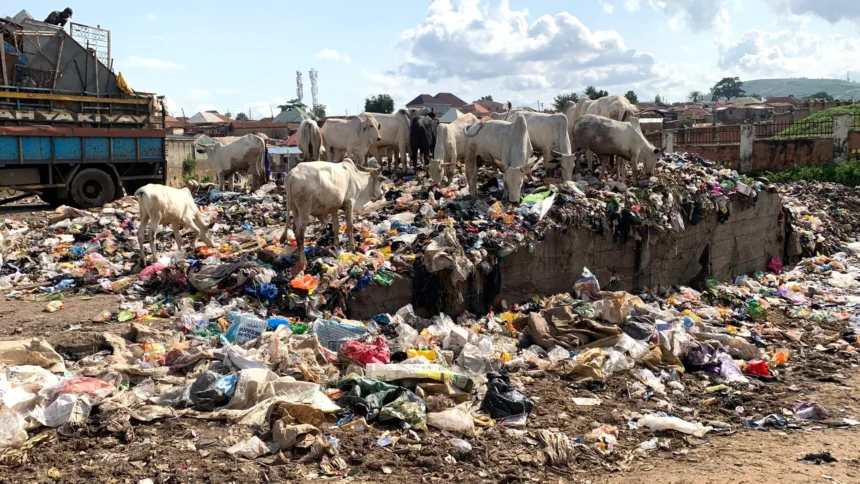
Residents living along Karu Road in Abuja have raised alarm over mounting heaps of refuse lining residential streets, warning that poor waste management now poses serious health and environmental risks in the nation’s capital.
Early morning scenes along the corridor show large piles of rotting food, plastic waste, broken glass and scrap metal dumped beside homes and roadways. Flies swarm around the refuse, dirty water seeps into the ground, and small fires burn continuously, releasing thick black smoke from melting plastic.
“This is how we live every day,” said a resident who lives close to one of the dumpsites. “The smell is terrible, and when it rains, the water flows straight into our houses.”
Residents Say Waste Collection Has Failed
Residents say waste collection in the area has become irregular or completely absent, forcing many households to dump refuse in open spaces or drainage channels.
Nigeria once enforced monthly environmental sanitation exercises as a civic duty, but residents say the practice has largely disappeared without replacement systems to manage growing urban waste.
Community leaders along Karu Road said repeated complaints to local authorities have produced little change, allowing refuse to pile up for weeks at a time.
Abuja Generates Thousands of Tonnes of Waste Daily
Environmental experts estimate that the Abuja Municipal Area Council (AMAC) generates over 2,000 tonnes of solid waste every day, straining existing waste management infrastructure.
Nationwide, Nigeria produces an estimated 32 million metric tonnes of waste annually, but only 20 to 30 percent is collected and disposed of in environmentally sound ways. Most ends up in open dumps, waterways, or is burned in the open.
Along Karu Road, residents say burning waste has become a common survival method, despite the health dangers.
Health Experts Warn of Rising Disease Risk
Medical professionals warn that unmanaged waste increases the risk of malaria, cholera, respiratory infections and other illnesses, particularly among children and the elderly.
“Open dumping and burning expose residents to toxic smoke and disease-carrying pests,” a medical doctor told reporters. “Long-term exposure can lead to serious respiratory and cardiovascular conditions.”
During the rainy season, residents report that floodwaters wash through the dumps, spreading contaminated water into homes and public spaces.
Climate Activists Link Waste to Climate Change
Climate activists say the situation also contributes to climate change. Decomposing organic waste releases methane, a potent greenhouse gas, while burning plastic increases carbon emissions and worsens air quality.
Nigeria currently generates about 0.51 kilograms of waste per person per day, a figure expected to rise as population growth and urbanisation continue.
Calls for Government Action
Residents along Karu Road are calling on the Federal Capital Territory Administration (FCTA) and area councils to urgently improve waste collection, provide designated disposal sites, and enforce environmental regulations.
“If they can change the location,” Musa Saliu, a mechanic said. “We deserve clean air, clean water and a safe place to live.”
Until authorities intervene, residents fear the growing waste heaps will continue to threaten public health, degrade the environment and undermine the image of Nigeria’s capital city.