By Aisha Muhammad Magaji
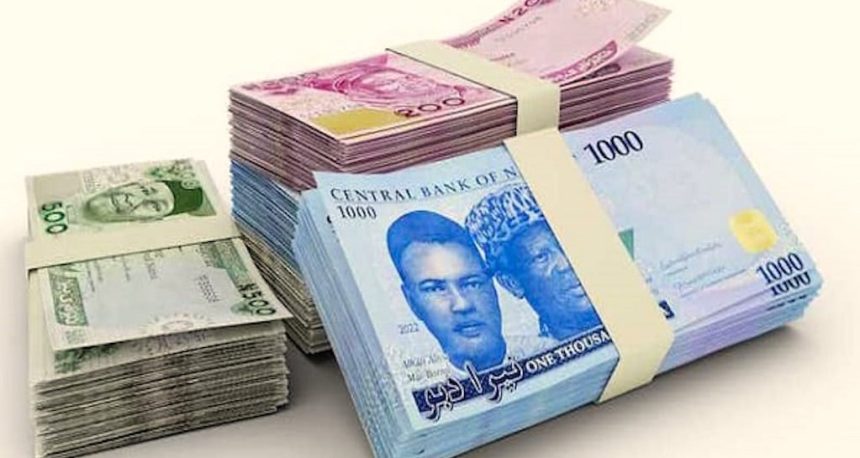
The Nigerian Naira has once again come under global scrutiny after Forbes ranked it the ninth weakest currency in Africa in its September 2025 currency calculator report. The development underscores the persistent fragility of Nigeria’s economy despite government assurances of reforms and a recent slowdown in inflation.
According to Forbes, the ranking is based on real-time foreign exchange data collected via the Open Exchange Rates API, which refreshes every five minutes to reflect demand, supply, investor sentiment, and broader economic conditions. The findings show that the Naira continues to struggle against major global currencies, placing Nigeria among the ten African countries with the weakest exchange rates.
Forbes’ September 2025 index lists the weakest African currencies in the following order:
- São Tomé and Príncipe Dobra
- Sierra Leonean Leone
- Guinean Franc
- Ugandan Shilling
- Burundian Franc
- Congolese Franc
- Tanzanian Shilling
- Malawian Kwacha
- Nigerian Naira
- Rwandan Franc
This means that, despite being Africa’s largest economy by GDP, Nigeria’s currency now sits in the same category as smaller, resource-scarce economies struggling with limited global competitiveness.
The Naira’s depreciation has been long in the making. In January 2025, inflation in Nigeria stood at 24.5 percent but slowed to 20.12 percent by August following Central Bank interventions and tighter monetary policies. However, these gains have not translated into a stronger exchange rate. The Naira currently trades at over ₦1,400 to the US dollar in the official market and up to ₦1,600 in the parallel market.
Economists say the weak performance of the Naira reflects deeper structural challenges:
- Low foreign exchange inflows due to reduced oil revenues and underperforming non-oil exports.
- High import dependence, as Nigeria still imports fuel, machinery, and basic consumer goods.
- Debt servicing pressure, with a significant share of government revenues going into paying external loans.
- Investor skepticism, caused by policy inconsistencies and insecurity in key economic zones.
Financial analyst, Dr. Anthony Adeyemi, told The Guardian Nigeria that the ranking is “a reminder that Nigeria cannot keep patching its economy with short-term fixes.”
“The Naira’s position as Africa’s ninth weakest currency is not just about exchange rates. It is a reflection of our failure to diversify exports, create a robust manufacturing base, and improve investor confidence. Even with recent reforms, we remain too dependent on imports, and that keeps the Naira under constant pressure,” he said.
Similarly, economist and public affairs commentator, Aisha Danjuma, noted that “ordinary Nigerians bear the brunt of this weakness every day. Prices of food, fuel, and school fees for children abroad are skyrocketing. This is not an abstract statistic it’s people’s lives.”
A weaker currency has ripple effects across households and businesses. Import-dependent firms face rising costs for raw materials and equipment. For ordinary citizens, the price of essential goods from bread and rice to petrol continues to climb. Nigerians studying or living abroad also see tuition fees and living expenses rise sharply when converted from Naira.
Small businesses, which make up over 80 percent of Nigeria’s economy, are especially vulnerable. Many rely on imported spare parts or semi-processed materials and are forced to raise prices, passing the burden onto consumers.
The Central Bank of Nigeria (CBN) has introduced several measures to stabilize the Naira, including:
Unifying the multiple exchange rate windows to improve transparency.
Tighter controls on forex demand, particularly for luxury imports.
Pushing for local refining of petroleum products to reduce fuel importation.
Expanding foreign reserves through international credit lines and remittances.
The federal government has also intensified its campaign for economic diversification, emphasizing agriculture, digital technology, and solid minerals as future growth areas.
However, critics argue that these measures are not enough. Former CBN Deputy Governor, Kingsley Moghalu, recently said: “Nigeria cannot reform its way out of this crisis without real production. We must build a strong manufacturing base and add value to our exports. Until then, the Naira will remain weak.”
The Forbes ranking also offers lessons from other countries. Sierra Leone and Guinea, for instance, have battled currency weakness for years due to political instability and poor export performance. Uganda and Tanzania, despite relatively stable politics, face challenges due to limited industrialization.
On the other hand, countries like Kenya and South Africa, while not immune to currency volatility, have avoided this list due to stronger financial systems and diversified export bases. Analysts say Nigeria must learn from these models to avoid further decline.
Experts outline several steps Nigeria can take to strengthen the Naira:
- Boost local production to cut import bills and improve self-sufficiency.
- Diversify exports beyond crude oil, with emphasis on agriculture, technology, and creative industries.
- Rebuild investor confidence through consistent policies and improved security.
- Strengthen institutions like the CBN to operate independently and transparently.
- Support SMEs with credit access to scale up domestic production.
Forbes’ ranking of the Naira as Africa’s ninth weakest currency is more than a symbolic blow to national pride it is a warning. It highlights the urgent need for Nigeria to rethink its economic foundations, reduce dependency on imports, and create a diversified, resilient economy.
For now, the weakness of the Naira is felt in the markets, in household budgets, and in the aspirations of millions of Nigerians who must pay more for less. Unless bold reforms are implemented, the Naira may slip further, with devastating consequences for Africa’s most populous nation.