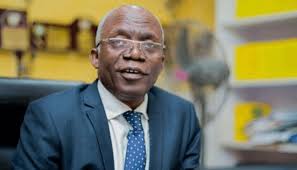
By Aisha Muhammad Magaji
Prominent human rights lawyer, Femi Falana, SAN, has faulted the Dangote Petroleum Refinery over its handling of workers’ rights, accusing the company of undermining labour laws and international conventions. He is now pushing for automatic union membership for staff, warning that anything less leaves workers vulnerable to exploitation.
Falana argued that contractual clauses allegedly preventing newly recruited drivers and staff from joining trade unions were illegal and unconstitutional. According to him, such practices directly violate Section 40 of the 1999 Constitution, which guarantees freedom of association, as well as provisions in the Trade Union Act and several international labour treaties signed by Nigeria.
“No company, no matter how big, can override the constitutional right of workers to freely associate and join unions. We must go further to make automatic union membership the standard, so employers cannot intimidate or exclude workers from enjoying their rights,” Falana said.
The controversy began earlier this month when the Nigeria Union of Petroleum and Natural Gas Workers (NUPENG) accused Dangote Refinery of barring new tanker drivers from affiliating with the union. The allegations triggered outrage across the oil and gas sector, prompting solidarity from the Petroleum and Natural Gas Senior Staff Association of Nigeria (PENGASSAN).
Dangote management swiftly rejected the claims, insisting that unionisation remains voluntary for all employees. The refinery described the accusations as a misrepresentation of employment terms, particularly around onboarding requirements for newly deployed compressed natural gas (CNG) trucks.
The tension escalated into threats of a nationwide strike before a Memorandum of Understanding (MoU) was signed on September 9, 2025, after a marathon meeting facilitated by the Federal Ministry of Labour and Employment and the Department of State Services (DSS).
Key agreements included:
- Workers are free to join unions without intimidation.
- The unionisation process would be completed within two weeks.
- No employee would face sanctions for participating in the strike.
NUPENG subsequently suspended its planned two-day strike, while PENGASSAN vowed to monitor compliance closely.
Despite the MoU, Falana insists the problem goes deeper than temporary resolutions. He is advocating for automatic union membership, under which all eligible workers would be enrolled into relevant unions upon employment unless they explicitly opt out.
“It is not enough to say workers are free to join unions. The real protection is automatic membership. Otherwise, powerful employers will continue to find ways around the law,” Falana stressed.
Dangote Group has repeatedly denied suppressing union rights, maintaining that union association is voluntary. In a recent statement, the refinery said it remains committed to protecting constitutional rights but would not compel employees to belong to any labour body.
The company also emphasised that its employment practices align with Nigerian labour laws and global best standards.
Analysts say the dispute raises broader questions about labour rights enforcement in Nigeria’s private sector.
- For Dangote Refinery, automatic union membership could alter its employment structure and strengthen collective bargaining.
- For NUPENG and PENGASSAN, the push could boost membership and negotiating power, giving unions more leverage in the oil and gas sector.
- For the Federal Government, the case serves as a litmus test for how far it is willing to go in balancing industrial peace with protecting workers’ rights in strategic industries.
Observers warn that if the underlying issues are not resolved, Nigeria could face recurring industrial disputes in its energy sector a critical area for both domestic fuel supply and foreign exchange earnings.