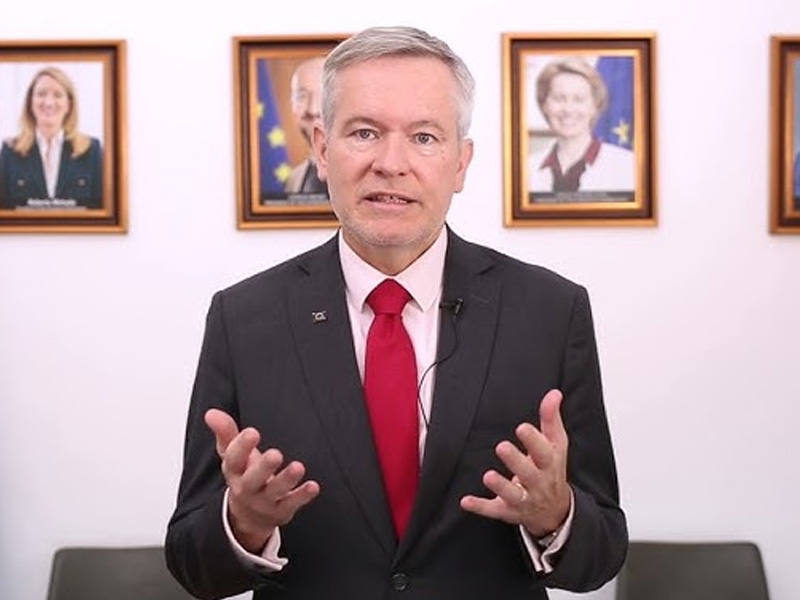
The European Union (EU) has come to Nigeria’s defense following threats by U.S. President Donald Trump to consider military action over allegations of religious persecution.
In a statement issued on Tuesday, the EU reaffirmed its respect for Nigeria’s sovereignty and expressed confidence in the country’s ongoing efforts to promote peace, unity, and interfaith dialogue.
The EU said it remains committed to supporting Nigeria through peacebuilding initiatives, human rights advocacy, and security cooperation.
The EU Ambassador to Nigeria, Gautier Mignot, described the bloc’s partnership with Nigeria as one founded on “mutual respect and shared values.”
Read Also: FG Inaugurates Steering Committee for €40m EU-Supported Education
He stated that the EU would continue to work closely with the Nigerian government and civil society to address issues of security, tolerance, and human rights without compromising the nation’s sovereignty.
“The European Union stands firmly for peace and dialogue. We respect Nigeria’s sovereignty and recognize the government’s efforts to foster unity among its diverse religious and ethnic groups,” Ambassador Mignot said. “The EU remains ready to strengthen its support for peace and stability in Nigeria.”
The response came after Trump designated Nigeria as a “Country of Particular Concern”, citing alleged cases of religious persecution, a move that triggered widespread criticism from African and international observers who described it as “misinformed and inflammatory.”
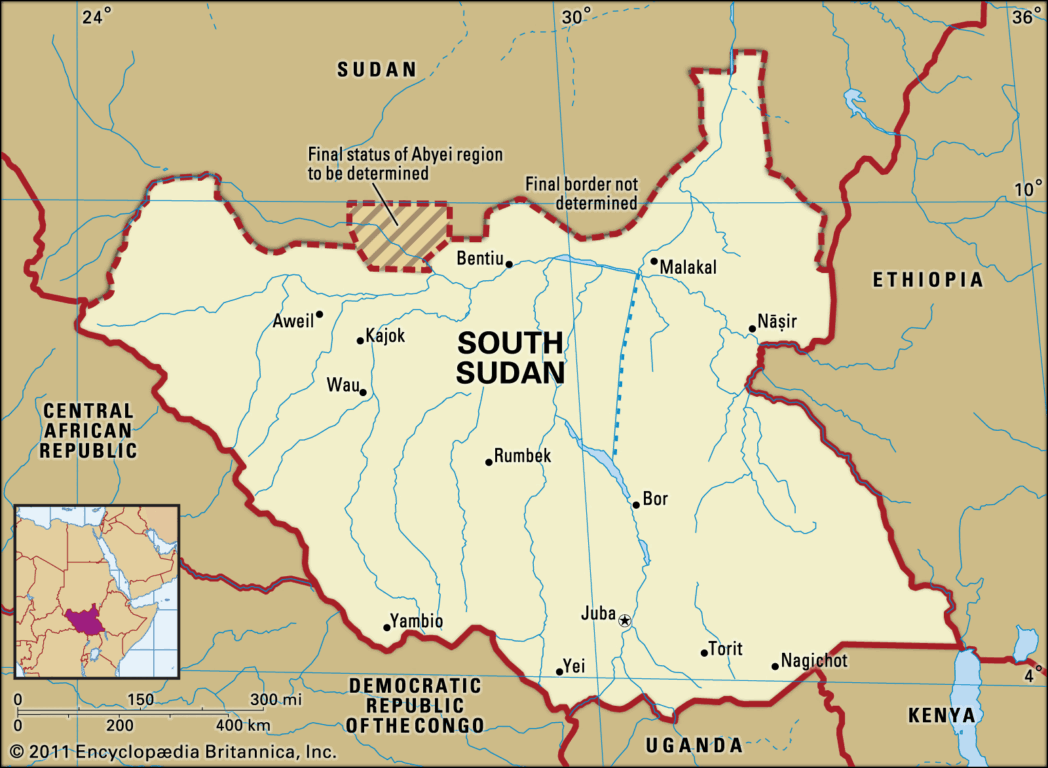
Reacting to Trump’s remarks, Nigeria’s government issued a stern warning, cautioning him against making “false and divisive allegations” that could destabilize the West African subregion. A government spokesperson urged the U.S. leader “not to create another Sudan through reckless rhetoric and baseless accusations.”
Diplomatic sources in Abuja confirmed that Nigeria has opened consultations with the EU, African Union (AU), and other international partners to reinforce cooperation on religious tolerance, peacebuilding, and governance reforms.
Observers say the EU’s intervention signals strong international support for Nigeria’s sovereignty at a time of heightened global sensitivity to issues of religious freedom and human rights.