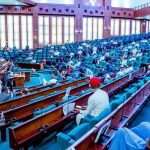
The House of Representatives has approved sweeping amendments to Nigeria’s Electoral Act, endorsing stiffer punishments for vote buying and selling, including a minimum of two years’ imprisonment or a ₦5 million fine, or both, alongside a 10-year ban from contesting elections.
The decision was reached during a clause-by-clause consideration of the report of the House Committee on Electoral Matters at the Committee of the Whole, presided over by Deputy Speaker Benjamin Kalu.
Lawmakers described the move as a decisive step toward sanitising Nigeria’s electoral process and curbing the persistent menace of vote trading, which has continued to undermine the credibility of elections across the country.
Under the approved amendment, individuals found guilty of buying or selling votes during elections would face:
• At least two years in prison, or
• A ₦5 million fine, or
• Both imprisonment and fine, and
• A 10-year disqualification from contesting any election.
The lawmakers agreed that the severity of the punishment reflects the damaging impact of vote buying on democracy, governance, and public trust in electoral outcomes.
Vote buying has been widely criticised by election observers, civil society groups, and international partners as one of the most entrenched threats to credible elections in Nigeria, particularly during recent general and off-cycle polls.
In another major adjustment, the House approved an extension of the deadline for political parties to submit their list of candidates to the Independent National Electoral Commission (INEC).
The new amendment shifts the deadline from 180 days to 210 days before an election, a move lawmakers said would provide INEC with additional time for verification, processing, and administrative preparations.
Supporters of the amendment argued that the extended timeline would reduce last-minute litigations, nomination disputes, and logistical pressures that often complicate the electoral calendar.
The House also approved provisions allowing for the use of electronically generated voter identification during elections.
Under the amendment, voter accreditation and voting may rely on:
• Downloadable voter cards with unique QR codes, or
• Any other form of voter identification prescribed by INEC.
This provision is aimed at modernising Nigeria’s electoral system, reducing dependence on physical Permanent Voters’ Cards (PVCs), and addressing challenges related to card collection, loss, and replacement.
Lawmakers noted that the change aligns with global best practices and reflects growing confidence in technology-driven election management, provided adequate safeguards are put in place.
Briefing journalists after the session, Chairman of the House Committee on Electoral Matters, Adebayo Balongun, clarified that the House has abandoned plans to repeal the Electoral Act 2022.
Instead, lawmakers resolved to pursue targeted amendments, following the failure of broader reform proposals to secure sufficient backing among legislators and stakeholders.
“The House has shelved the idea of repealing the Electoral Act 2022 and resolved to make specific amendments,” Balongun said.
The proposed Electoral Bill 2025 was initially introduced as legislation to repeal the Electoral Act 2022 and enact an entirely new electoral law. According to the committee, the move was intended to consolidate recent electoral gains while addressing emerging challenges in Nigeria’s electoral process.
Among the far-reaching reforms canvassed were:
• Early voting provisions
• Voting rights for inmates
• Replacement of PVCs with fully technology-driven or downloadable voter accreditation systems
• Major adjustments to election timelines
However, Balongun explained that these proposals did not enjoy sufficient support across both chambers of the National Assembly or among stakeholders consulted during the legislative process.
“As the legislative process progressed, it became evident that many of these far-reaching proposals did not command the support of the majority of members across the two Chambers, nor did they enjoy sufficient consensus among key stakeholders,” he said.
Consideration of the remaining clauses of the Electoral Act amendment bill is still ongoing in the House. Once completed, the bill will proceed through the remaining legislative stages before transmission to the Senate for concurrence.
Observers say the approved provisions on vote buying, electronic voter identification, and extended timelines could significantly shape Nigeria’s future elections if eventually signed into law.