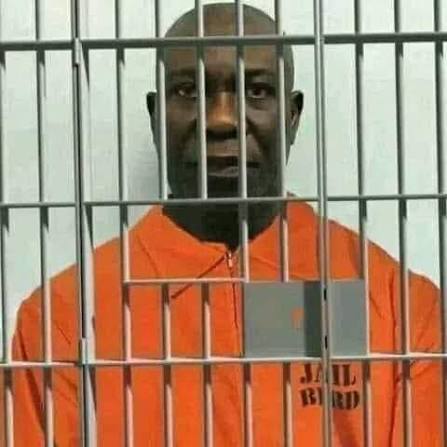
Efforts by the Federal Government to secure the transfer of former Deputy Senate President Ike Ekweremadu from a United Kingdom prison to Nigeria have triggered sharp divisions among political, cultural, and civil society leaders in the South-East.
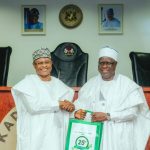
President Bola Tinubu recently dispatched a high-level delegation, comprising the Minister of Foreign Affairs, Yusuf Tuggar, and the Attorney General of the Federation, Lateef Fagbemi to London for discussions with UK Ministry of Justice officials on the application of Nigeria’s prisoner-transfer agreement with the United Kingdom. The delegation also visited the Nigerian High Commission in London, where they were received by Acting High Commissioner Mohammed Maidugu, reinforcing the seriousness of the government’s diplomatic engagement.
Reactions from the South-East, however, remain mixed. A number of regional leaders and groups questioned the intent behind the government’s renewed interest, with some describing the move as politically motivated. Chilos Godsent, President of the Igbo National Council, said the federal government must clarify its intentions, noting that many view the development through the lens of the approaching 2027 general elections.
The Ala-Igbo Development Foundation also expressed skepticism. Its president, Prof. Awuzie Unachukwu, argued that the same urgency applied to Ekweremadu has not been extended to other detained Igbo figures, including Nnamdi Kanu. He described the selective nature of the intervention as troubling and inconsistent with demands for equity and fairness.
Other voices in the region, however, have welcomed the government’s efforts. Okechukwu Isiguzoro, Deputy President-General of Ohanaeze Ndigbo, said Ekweremadu has shown remorse and deserves the opportunity to serve the remainder of his sentence closer to home. He emphasized that repatriation would support family access, rehabilitation, and reintegration.
The Abia State Chairman of the Peoples Democratic Party, Abraham Amah, also defended the initiative, stressing that motives aside, any lawful diplomatic avenue that eases the former lawmaker’s hardship should be supported. Similarly, the Coalition of South-East Youth Leaders (COSEYL) described the move as an act of compassion and a welcome demonstration of humanitarian leadership.
Not all national voices agree. Human rights advocate Femi Falana (SAN) criticized the plan, calling it discriminatory. He questioned why the government has not sought similar transfers for other Nigerians incarcerated in the UK and noted that such agreements are typically reciprocal, yet no British national is currently serving a sentence in Nigeria.
Ekweremadu, his wife Beatrice, and their associate Dr. Obinna Obeta were convicted in the UK in 2023 for a conspiracy related to organ trafficking involving a young Nigerian man. He was sentenced to nine years and eight months, while Beatrice received four and a half years before being released earlier this year.
The renewed diplomatic push has revived debate over the long-standing but rarely utilized prisoner-transfer treaty between Nigeria and the UK. While supporters view the government’s action as a compassionate step, critics argue it risks setting a precedent that favors political elites over ordinary Nigerians.