By Aisha Muhammad Magaji
When Former Nigeria President Late Muhammadu Buhari inaugurated the Dangote Petroleum Refinery in May 2023, questions abounded over whether Nigeria’s largest private refining project would truly reshape energy security in Africa’s most populous nation. As of September 2025, the plant has not disappointed in influencing markets but growing pains, labour strife, policy tension, and supply challenges now test its ability to deliver long-term industrial transformation.
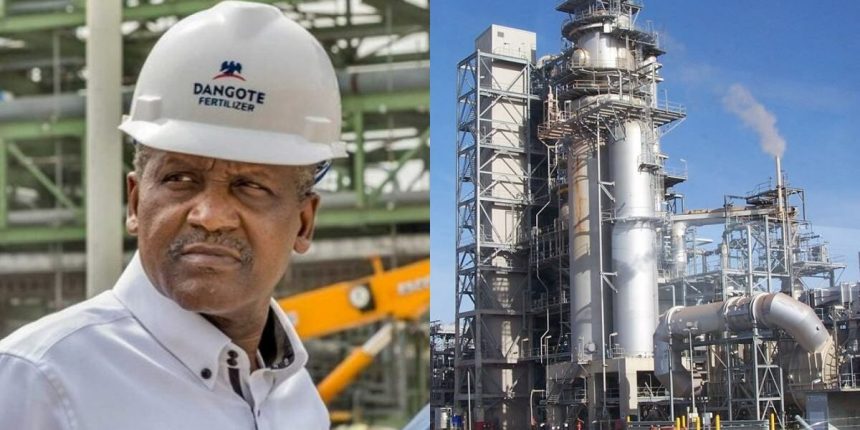
The concept for Dangote’s refinery was first publicly articulated in 2013, with plans to build a facility that could process 650,000 barrels of crude oil per day. Its location in the Lekki Free Trade Zone in Ibeju-Lekki, Lagos, leveraged proximity to deepwater access and space for large infrastructure. The refinery is integrated with a petrochemical plant, part of a Dangote Petrochemical Complex spanning over 2,600 hectares.
Dangote’s official statements emphasize that the refinery is Africa’s biggest and the world’s largest single-train facility. It is designed to process both Nigerian and imported crudes, offering flexibility in feedstock sourcing. The infrastructure includes a 435 MW power plant capable of sustaining internal operations and a pipeline network stretching over 1,100 km for gas handling.
The project’s cost has been variously reported some sources place it around US$19 billion to US$20 billion. In August 2025, Afreximbank led a syndicated facility bringing USD 1.35 billion toward refinancing capital outlays tied to the refinery.
Construction faced repeated delays, funding gaps, and changes in location. It was originally expected to be operational by mid-2023, but modularisation, infrastructure works, and import constraints moved full operations into late 2023 and early 2024.
By January 2024, Dangote began producing diesel and aviation fuel; gasoline production followed, allowing local distribution and gradually reducing Nigeria’s dependence on imported refined petroleum. The facility’s early output steadily gained market share; by early 2025, analysts estimated that Dangote was meeting as much as 60% of Nigeria’s gasoline demand domestically.
A landmark move came in August 2025, when Dangote announced a nationwide distribution model: as of August 15, the refinery would supply PMS (petrol) and diesel directly to marketers, manufacturers, aviation firms, telecoms and large users including deploying 4,000 CNG-powered trucks to improve delivery networks. This move was aimed at cutting out middlemen logistics costs and asserting control over distribution.
In August 2025, Dangote also cut its ex-depot petrol price by ₦30 per litre (from ₦850 to ₦820) in response to market pressures. Such pricing flexibility reflects the power of local refining to exercise downstream influence, subject to feedstock and forex constraints.
In September 2025, Dangote announced the dismissal of a significant number of employees, citing safety, alleged sabotage, and operational reorganisation. It was later reported that the layoffs involved hundreds of Nigerian workers. In response, PENGASSAN (Petroleum and Natural Gas Senior Staff Association of Nigeria) ordered a halt to crude and gas supplies to the refinery, a dramatic escalation of the dispute.
As of late September 2025, union pressure forced a shutdown of one train of the fertilizer component and a full halt to parts of the refining operation, according to union claims. The Nigeria Labour Congress (NLC) mobilised broader labour support, threatening nationwide industrial action in solidarity. The refinery obtained a court injunction restraining unions from blocking gas or crude supply.
These labour tensions strike at the heart of Nigeria’s industrial experiment: large-scale capital projects cannot succeed without sustainable human relations, especially in a sector with strong union traditions and high technical complexity.
PENGASSAN also wrote that it will be halting all transportation and supply of Gas and other resources, which later led to Court Delivering a Ban on them doing so.
Another flashpoint arose in late September when Dangote suspended petrol sales in naira, citing that local sales in the currency exceeded its allocated naira-denominated crude supply. The move threatened to ripple into price instability, FX pressure, and supply constraints in local fuel markets. After intervention from a Naira-for-Crude Technical Committee, the suspension was reversed and sales resumed. The reversal also underscored the fragile balance between export economics and domestic supply obligations.
Dangote’s foray into downstream logistics via the 4,000 trucks gives it control over distribution that many marketers view as bordering on vertical dominance. Opposition voices have accused the refinery of undercutting local marketers and of selling refined products more cheaply for export than to domestic customers. For example, some importers alleged that Dangote petrol is sold at ₦65 per litre less to Togo than within Nigeria, raising fairness questions.
Dangote management denied monopoly allegations, stating that assertions of forced union waivers or anti-labour behaviour were false. They said any dispute was with the tanker drivers’ segment (NUPENG/PTD) rather than the broader refinery workforce.
Even amid upheaval, Dangote’s operations have tangible macro impacts:
Reduced import bills & FX savings: Each liter refined locally subtracts the transportation, margin, and premium value of imports.
Export revenues: Surplus output is shipped regionally and globally, diversifying Nigeria’s oil export streams.
Industrial clustering: Availability of local refined fuels and petrochemical feedstocks attracts downstream investment.
Job & skills development: The refinery has been lauded by the NLC for creating opportunities for engineers, technicians, and supporting sectors.
Balance sheet support & refinancing: In August 2025, Afreximbank’s US$1.35B facility reinforced Dangote’s capital structure and mitigated liquidity strain.
Market share gains: S&P Global and other analysts say Dangote is capturing up to 60% of Nigeria’s gasoline demand internally.
Challenges Ahead & What to Watch
The post-layoff dispute must be resolved quickly. Further union blockades risk systemic disruption to Nigeria’s petroleum supply chain.
Crude allocation especially in naira remains critical. If shortfalls recur, the plant cannot maintain full production.
Government rules on local content, allocation, and upstream support need clarity. Shifts in subsidy or forex regimes could alter project viability.
Exporting too aggressively while curtailing local gas or petrol supply will attract political backlash.
The 4,000 trucks effort is bold, but fairness to independent marketers will remain under the spotlight.
Predictive maintenance, modular turnarounds, and unit availability are technically demanding in a single-train plant of this size.
By 30 September 2025, the Dangote refinery is more than a grand industrial ambition it is a functioning leviathan in Nigeria’s energy landscape. It is delivering lower imports, strengthening distribution, and powering export flows. But its future hinges on resolving labour disputes, ensuring feedstock through stable policies, and striking a balance between corporate competitiveness and national responsibility.
If Dangote, government, unions, and regulators can align, this refinery could anchor Nigeria’s industrial revival for decades. But the next few months amid strikes, pricing shifts, and market reactions will test whether this flagship project becomes a stable pillar or a volatile flagship struggling under its own weight.