
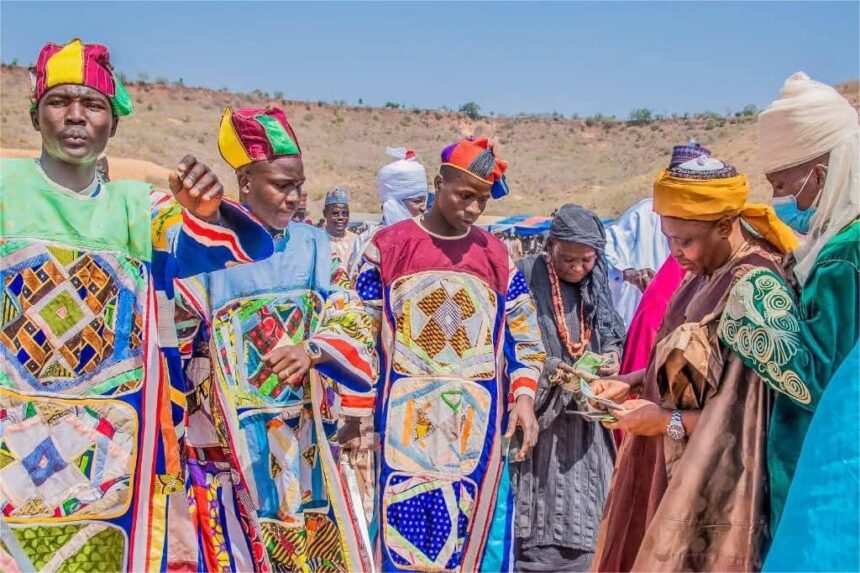
The scenic hills of Daniski–Gudi came alive with colour, music and tradition as thousands gathered for the 2026 Annual Daniski–Gudi Hills Festival, a cultural celebration that highlighted unity, heritage, and community pride in Yobe State.
Dignitaries from across and beyond the state joined traditional rulers, cultural troupes and residents for the vibrant festival, which has grown into one of the region’s most significant heritage events.
Governor Mai Mala Buni, represented at the occasion by his deputy, Hon. Idi Barde Gubana (Wazirin Fune), urged citizens to embrace culture as a powerful tool for promoting unity and peaceful coexistence.
He noted that every culture carries values, norms, and traditions that define the identity of its people, stressing that such diversity should serve as a bridge rather than a barrier.
According to the governor, the Daniski–Gudi festival is more than a celebration — it is a unifying platform for people with shared history and ancestry, and a driver of tourism and economic growth.
As part of efforts to preserve indigenous traditions, Governor Buni revealed that the state government has constituted a committee on the revitalisation of cultural heritage, with special attention on reviving the Kukuwa cultural legacy and other fading traditions.
The committee is expected to work closely with traditional institutions to ensure each emirate council sustains at least one cultural heritage for promotion and display. The governor also assured that the government would consider providing improved facilities at the Daniski–Gudi festival grounds to enhance future editions.
In his welcome address, the Emir of Fika and Chairman of the Yobe State Council of Traditional Rulers, Dr. Muhammad Abali Ibn Muhammad Idrissa, described the festival as a proud display of the people’s rich heritage, expressed through traditional dances, crafts, and diverse customs.
He said the annual gathering plays an important role in strengthening social bonds, preserving history, and promoting mental well-being by reconnecting individuals with their roots.
The emir also commended the state government for its commitment to safeguarding cultural identity and supporting community-based traditions.
Adding historical depth to the event, Hamidu Isa Babi, Permanent Secretary in the Public Service Office of the Head of Service, traced the origins of the Bolewa people to Daniski. He explained that the area marked the first time the Bolewa settled in a defined territory after migrating from the shores of Lake Chad.
Daniski’s naturally fortified hills provided security from external threats, enabling the preservation of the people’s beliefs and traditions. At its peak, the historic settlement was said to have housed at least 15,000 inhabitants.
The event featured spectacular traditional dances and a grand Durbar, thrilling spectators and showcasing the cultural diversity of Yobe State.
Among the royal fathers in attendance were the emirs of Bade, Damaturu, Biu, Askira, Shani, Gwoza, Tikau, Potiskum, Fune, Jajere, and Ngilzarma, reflecting the broad cultural representation at the festival.
As drums echoed across the hills and colourful regalia filled the landscape, the 2026 Daniski–Gudi Hills Festival stood as a strong reminder that culture remains a vital force for unity, identity, and development in Yobe State.