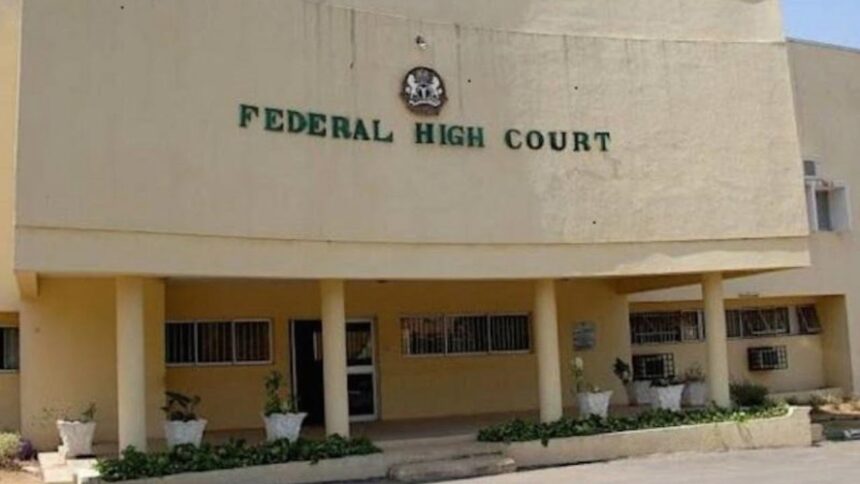
Justice Emeka Nwite of the Federal High Court, Abuja, has ordered an accelerated hearing in the trial over the 2011 bombing of the United Nations building in Abuja.
The judge gave the order after prosecuting counsel Alex Izinyon (SAN) filed an application. Izinyon told the court that the case has dragged on for nearly 15 years and needs urgent attention. Therefore, he asked the court to fast-track the proceedings under rules guiding terrorism cases.
The Department of State Services is prosecuting five men over the August 26, 2011 attack.
The defendants include Al-Barnawi, also known as Kafuri and Mallam Dauda. Others are Mohammed Bashir Saleh, Umar Mohammed Bello and Yakubu Nuhu.
Izinyon said the case has remained in court for about nine years. He urged the judge to allow daily hearings where possible to speed up the trial. Defence lawyers did not oppose the request. As a result, Justice Nwite granted the application.
At the resumed hearing, a senior DSS officer testified during a trial-within-trial. The court is now deciding whether the defendants gave their statements voluntarily.
The witness, identified as PW3, said he works as a computer forensic expert in the agency’s technical department. He explained that he recorded the interview sessions with the defendants.
However, during cross-examination, he admitted that he could not remember the exact date when one of the recordings, marked as Exhibit C, was made.
Defence counsel challenged the integrity of the video recording. The lawyer claimed the footage contained several skips and argued that investigators did not read cautionary words to the second defendant before taking his statement.
The witness rejected the claim. He said investigators properly cautioned the defendant and informed him of his right to a lawyer before he chose to continue the interview.
In addition, the witness insisted that officials recorded every official interaction between investigators and the defendants.
The DSS officer also explained why the video showed only the defendant’s face. He said agency rules protect the identity of interviewers for security reasons.
According to him, the standard procedure prevents cameras from capturing the faces of officers during questioning. He added that if any security concern arises, the court decides how to handle it.
The witness addressed claims that officers could pause or edit the recording device. He said the forensic recorder cannot be tampered with.
He explained that the device records in real time onto two identical DVDs. If anyone pauses the session, the system automatically closes and digitally signs the file. Therefore, no one can add or change content later.
He added that the equipment meets standards under the Evidence Act and aligns with global best practices.
After listening to the testimony, the court adjourned the case to March 4 for continuation.
With the accelerated hearing now in place, the court will move faster in examining evidence and deciding whether to admit the disputed statements.