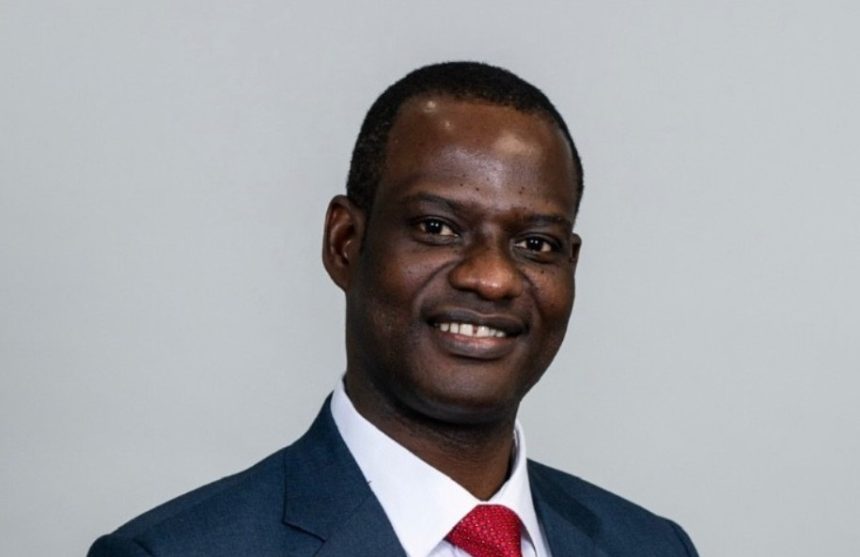
The Chairman of the Presidential Committee on Fiscal Policy and Tax Reforms, Taiwo Oyedele, has clarified that Nigeria’s new tax reforms are not designed to impose new levies or create additional financial pressure on citizens including those involved in cryptocurrency trading but rather to simplify the nation’s tax system, close loopholes, and bring long-overdue clarity to how digital and financial assets are taxed.
Speaking during a media parley in Abuja, Oyedele said that the goal of the Federal Government’s tax reform is to promote transparency, fairness, and predictability in the nation’s fiscal framework.
“There is no secret new tax in Nigeria. What we are doing is simplifying the system, harmonizing taxes, and ensuring that only those who should pay are paying, and that they pay the right amount,” Oyedele said.
He added that the reforms are anchored on three major principles equity, clarity, and competitiveness stressing that the changes should “help businesses plan better and encourage compliance, not frighten investors or traders.”
In recent weeks, discussions on social media platforms have centered on whether the new Capital Gains Tax (CGT) regime will burden cryptocurrency traders, given that gains on asset sales including digital assets could now attract a 30% tax.
Oyedele explained that the reform seeks to “standardize and clarify” what qualifies as taxable income, not to introduce a new crypto tax. He said that the government understands the need to balance innovation with regulation in the fast-evolving digital economy.
“The idea is to ensure that everyone from traditional investors to digital asset traders operates under clear and fair tax rules,” Oyedele stated. “This isn’t about raising the burden, but about transparency. Small investors and low-income earners will not be penalized.”
According to the reform framework, households earning ₦250,000 or less per month will not be subject to personal income tax, while several goods and services such as food, education, and health remain exempted.
Tax and financial experts have largely welcomed the reform, describing it as an attempt to bring order to a historically chaotic system. However, they also warned that implementation would determine whether the policy succeeds.
According to Analysts at PwC Nigeria noted that the introduction of clarity in the taxation of digital and financial assets could help reduce evasion and attract investors who prefer regulatory certainty.
Economist Dr. Tope Fasua also commented that while the new rates might appear higher, “it is not necessarily an increase in burden, but a reorganization. The biggest problem Nigeria has had is uncertainty and multiplicity. Oyedele’s committee is trying to fix that.”
Still, others believe the 30% capital gains rate may be steep for digital traders if enforcement becomes aggressive. Renaissance Capital Africa, in a recent report, advised the government to accompany the reform with clear guidance, public sensitization, and a simple online compliance system.
Nigeria’s crypto market remains one of the largest in the world, with millions of young Nigerians engaging in peer-to-peer trading, remittances, and blockchain-based finance.
For years, the absence of clear taxation rules for crypto transactions created confusion. While the Central Bank previously restricted crypto-related banking transactions, the new fiscal framework marks a gradual shift towards recognition and structured regulation of digital assets.
Oyedele said the goal was not to discourage digital innovation but to ensure fairness and accountability. “We must modernize our system to reflect today’s realities. You cannot have a 20th-century tax system in a 21st-century economy,” he said.
He emphasized that the reforms would consolidate taxes, harmonize collection at both state and federal levels, and cut down the number of official taxes from over 60 to fewer than 10.
Experts have urged the Federal Inland Revenue Service (FIRS) to promptly publish detailed implementation guidelines, explaining how the CGT applies to digital assets, what exemptions exist, and how traders should calculate and report gains.
Oyedele’s committee has repeatedly said that Nigeria’s problem is not a lack of taxes, but low efficiency and poor compliance. Nigeria’s tax-to-GDP ratio currently stands at about 10.8%, one of the lowest in Africa, compared to South Africa’s 27% and Ghana’s 18%.
“We are not creating more taxes. We are fixing the system to ensure that what we already have works effectively,” Oyedele reiterated. “People should not be taxed into poverty. The focus is on clarity, fairness, and economic growth.”
He said the reforms aim to double Nigeria’s tax-to-GDP ratio to 18% within three years without increasing the tax burden on ordinary citizens.
Oyedele’s reassurance offers a glimpse of hope to crypto traders and digital investors who fear excessive regulation. His message is clear: the government is not out to punish innovation but to bring order and fairness into Nigeria’s tax ecosystem.
Still, success will depend on implementation whether the Federal Government can match its reformist rhetoric with transparent execution, consistent communication, and trust-building among taxpayers.
Until then, the balance between clarity and burden remains the test of Nigeria’s new fiscal dawn.