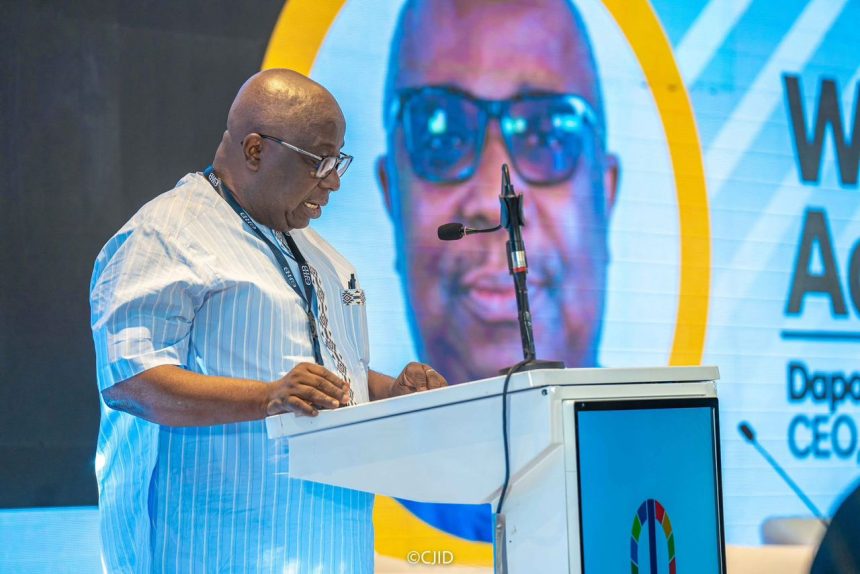
Stakeholders at the 2025 Media and Development Conference organised by the Centre for Journalism Innovation & Development (CJID) have called for a stronger, more inclusive information ecosystem to support Africa’s fragile democracies. The conference, held in Abuja, focused on the theme “Reimagining Democracy, Development and Data for the Next Decade.”
CJID’s Chief Executive, Dapo Olorunyomi, warned that Africa is approaching a critical turning point, where democratic backsliding, public distrust and unchecked data exploitation threaten civic rights. He urged governments and media institutions to prioritise transparency and citizen agency, insisting that the continent must redefine how democracy operates in a digital era.
A keynote by Juana Kweitel, Vice President at Luminate, highlighted the growing dominance of social media platforms in shaping public debate. She noted that a handful of actors now control influential digital spaces, creating systems that “reward engagement over truth” and weaken factual journalism.
The conference also examined regional democratic challenges as ECOWAS marks its 50th anniversary. Governance expert Meenah Mensah criticised the bloc for failing to translate regional integration into real benefits for citizens. She argued that ECOWAS has focused more on political crises than economic cooperation and noted that its protection of democracy is often limited to election seasons. She called for policies that promote digital inclusion and easier movement across borders, including harmonised telecom systems.
Media independence and ownership dominated discussions on Nigeria’s information landscape. Veteran media advocate Lare Arogundade observed that political control of major media houses continues to undermine editorial freedom. Supporting this view, Alhassan Yahya, President of the Nigeria Union of Journalists (NUJ), condemned what he called a “conglomeration of politicians” who own media outlets without investing in their development.
Yahya renewed calls for the passage of a Media Enhancement Bill to strengthen legal protections for journalists. He urged media practitioners to embrace what he described as an “attitudinal change,” noting that public trust remains the most valuable currency for journalism’s survival.
Participants also discussed how journalists can report on insecurity while balancing safety concerns. Experts recommended people-centred reporting approaches that provide accountability in conflict zones without risking journalists’ lives or restricting press freedom.
CJID used the conference to showcase new tools and research, including work by its Data, Innovation and Development Lab (DAIDAC) on information disorder and the forthcoming CJID Openness Index, designed to measure government transparency.
With more than 20 sessions featuring journalists, policymakers, technologists and civil society leaders, the conference underscored the urgency of strengthening Africa’s media ecosystem. Speakers agreed that rebuilding trust, defending press freedom and ensuring digital rights will be essential to shaping the continent’s democratic future.