
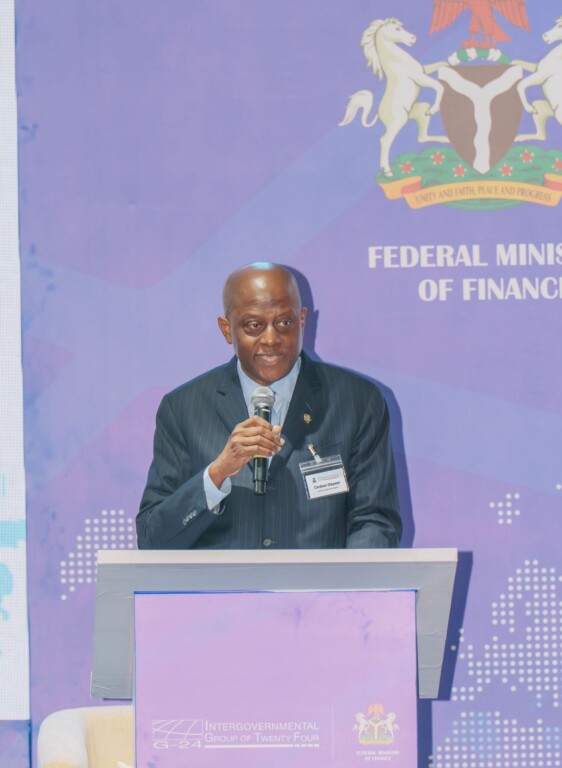
CBN Governor Olayemi Cardoso called for coordinated reforms in digital cross-border payments to support inclusive growth and financial stability.
He spoke at the G-24 Technical Group Meetings held in Abuja on February 19, 2026.
Governor Cardoso said efficient payment systems are vital for economic inclusion across developing and emerging economies worldwide.
He noted that high remittance costs and slow settlements limit global trade participation for households and small businesses.
Global remittance corridors still cost over six percent, with delays lasting several days, he explained.
These barriers exclude millions from modern financial and commercial activities across regions.
The governor warned that digital payments also carry risks to monetary stability and currency control.
He listed currency substitution, exchange rate volatility, and regulatory gaps as major challenges for policymakers.
Cardoso highlighted Nigeria’s reforms to strengthen anti-money laundering and counter-terrorism financing systems.
He said the CBN now applies strict dual screening for cross-border transactions to reduce financial crime risks.
Nigeria also introduced simplified KYC rules for low-value regional payments to support small exporters.
This reform helps Nigerian businesses use the Pan-African Payment and Settlement System more easily.
The CBN has also expanded its regulatory sandbox to support secure cross-border fintech solutions.
Cardoso reaffirmed Nigeria’s commitment to work with G-24 members and global partners.
He cited collaboration with the International Monetary Fund and the World Bank Group to modernise global finance.
The G-24 meeting focused on mobilising finance for sustainable and job-rich development.
Participants discussed ways to strengthen financial systems for emerging and developing economies.
Read Also: CBN Plans New Debit Card Rules to End ATM Congestion
Cardoso said coordinated action is needed to build a more inclusive and resilient global payment architecture.