A new phase of voluntary repatriation has seen a significant group of Nigerian refugees return home from Cameroon after more than a decade in exile, in an initiative that highlights ongoing cross-border humanitarian cooperation and the challenges of durable reintegration.
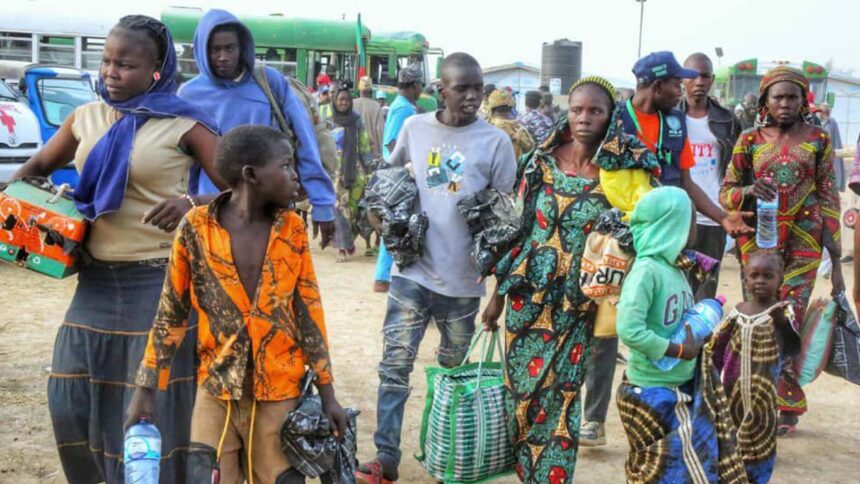
On 27–28 January 2026, 705 Nigerian refugees, representing 85 households, were repatriated from the Minawao Refugee Camp in Cameroon to their ancestral communities in Bama and Banki Local Government Areas of Borno State.
Earlier, a separate group of about 300 refugees marked the commencement of the fourth phase of the broader repatriation effort by returning to Gwoza Local Government Area.
The returns form part of a larger plan to repatriate more than 3,000 Nigerians who fled insurgency-related violence over 11 years ago and sought refuge in neighbouring Cameroon.
The initiative is being coordinated by the Borno State Government, the National Commission for Refugees, Migrants and Internally Displaced Persons, Cameroonian authorities, and international partners, including the United Nations High Commissioner for Refugees (UNHCR).
Officials involved in the exercise emphasised that the repatriation process is voluntary, safe, and dignified, reflecting commitments made by Borno State Governor Babagana Umara Zulum during a visit to the Minawao camp in December 2025.
Upon arrival, returnees were welcomed by local authorities and security officials, and provided with reintegration support packages including cash assistance and basic necessities, to help them re-establish livelihoods in their home communities.
For many returnees, the homecoming represents not just a physical relocation but a chance to begin rebuilding lives disrupted by years of displacement.
Some families knelt in prayer upon touching homeland soil, while children who spent much of their lives in exile observed familiar landscapes with wide-eyed curiosity.
Repatriation of refugees is part of a global trend in post-conflict settings, where displaced populations are assisted to return when security conditions improve, and essential services are available.
Such efforts, documented in other contexts, show that sustainable reintegration requires coordinated planning, long-term support for livelihoods, access to education and healthcare, and continued monitoring to ensure returnees do not face renewed hardship or secondary displacement.
Benefits for Returnees and Communities
- Reconnection with Home and Culture: Returnees can re-establish family ties and social networks that are critical to community cohesion.
- Economic Participation: With targeted support, returnees can engage in agriculture, trade, and local employment, contributing to local economies and self-sufficiency.
- Access to Reconstruction: Participation in reconstruction and community development initiatives can help rebuild infrastructure and services in previously conflict-affected areas.
While this phase of repatriation has been conducted with notable coordination and care, sustained governmental and international support is essential.
Past repatriation efforts in Africa have sometimes faltered when reintegration was under-resourced, leaving returnees to return to camps or precarious conditions.
Adequate investment in housing, healthcare, education, and economic opportunity is critical to avoid such outcomes and ensure returnees can remain in dignity and security.
The Borno and Federal Governments, alongside humanitarian partners, are urged to maintain a comprehensive reintegration framework, backed by consistent funding, monitoring mechanisms, and community-driven planning, to make repatriation a durable solution rather than a temporary move.