When many Nigerians hear the word Almajiri, a familiar image often comes to mind: young boys walking the city streets with bowls in hand, asking strangers for food or money.
But that image tells only part of a much older story.
The term Almajiri is derived from the Arabic word Al-Muhājir, meaning “seeker” who leaves home in pursuit of knowledge. For centuries across what is now Northern Nigeria, this represented a respected Islamic learning tradition.
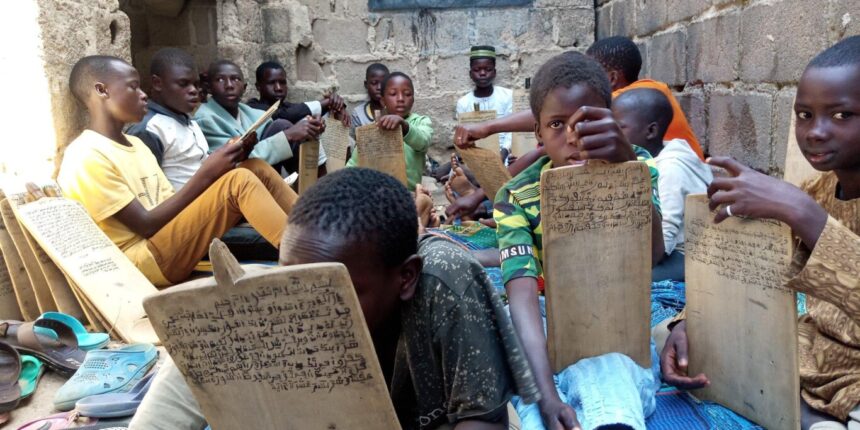
Long before modern schooling systems arrived, Qur’anic education formed the backbone of intellectual life across the Sokoto Caliphate. Young students travelled to study under learned scholars, known locally as Mallamai, memorising the Qur’an, learning ethics, jurisprudence, literacy, and community values.
Historical records show that this system once operated within a strong social contract.
Communities provided food, shelter, and care for students as an act of charity and collective responsibility.
Many graduates became judges, teachers, administrators, and respected religious leaders.
So what changed?
Colonial-era restructuring in the early 20th century altered governance and education systems across Northern Nigeria.
Traditional institutions lost state support, urban migration accelerated, and economic pressures deepened.
Over time, the communal welfare and network that sustained Almajiri students weakened, leaving only the structure without sufficient protection.
Reports indicate that millions of children in Northern Nigeria are enrolled in informal Qur’anic learning systems. Some students live under responsible supervision and receive structured instruction. Others, however, face poverty, displacement, or neglect, forcing them onto the streets.
This distinction matters.
Because not every Almajiri child is a beggar. Many are simply students pursuing religious education in modest circumstances.
Reducing the entire system to street begging risks misunderstanding of both its history and its potential.
Experts increasingly argue that the challenge is not Almajiranci itself, but regulation, child protection, and integration.
Successful reform efforts have focused on integrating Qur’anic education with literacy, vocational skills, access to healthcare, and formal schooling standards, preserving religious tradition while safeguarding children’s welfare.
The real question facing Nigeria is not whether the system should exist.
It is whether it can evolve. Can tradition and modern education work together?, Can communities, religious leaders, and government rebuild the protective structures that once defined the system?
Because behind every label is a child.
And behind many Almajiri students is not abandonment, but a search for knowledge.
The challenge now is to ensure that search leads not to the streets but to opportunity. Hi