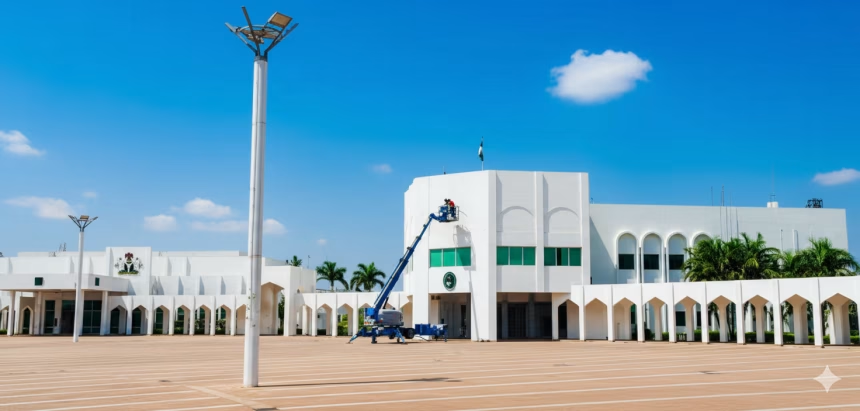
The Aso Rock Presidential Villa in Abuja is set to fully disconnect from Nigeria’s national electricity grid by March 2026, the State House Permanent Secretary, Temitope Fashedemi, has announced. The transition to a dedicated solar mini‑grid system reflects ongoing efforts to secure reliable power at the seat of government amid persistent grid instability.
Fashedemi made the disclosure while defending the State House’s 2026 budget proposal before the Senate Committee on Special Duties at the National Assembly in Abuja. He explained that installation of the solar infrastructure was completed toward the end of 2025 and has been undergoing testing since December, with a full cutover expected by March.
The solar project, funded with an initial ₦10 billion allocation in the 2025 budget and a further ₦7 billion in the 2026 appropriation, is designed to reduce government electricity costs, minimise reliance on diesel generators and decrease pressure on the often‑unreliable national grid.
Fashedemi referenced the State House Medical Centre, which installed its own solar system in May 2025 and has since operated with minimal generator use, as evidence of the technology’s viability. He said the Villa’s transition to solar power would deliver substantial savings and lead to greater energy independence within the complex.
Government officials have defended the project against criticism that it underscores broader failures in Nigeria’s electricity sector. Director‑General of the Energy Commission of Nigeria, Mustapha Abdullahi, described continuing reliance on the national grid as financially unsustainable, citing high annual electricity bills previously incurred by the Villa. Presidential spokesman Bayo Onanuga also pointed to similar renewable energy adoption by other nations’ seats of power as justification for the initiative.
The planned exit comes amid ongoing national grid challenges, including repeated system collapses that have left Nigerians with unstable access to power. For example, the grid recorded its first collapse of 2026 in late January, cutting power nationwide and reigniting public frustration with the sector’s performance.
While proponents praise the solar project as a forward‑looking investment in sustainability and cost‑efficiency for critical infrastructure, critics argue that it highlights wider inequalities in access to reliable electricity. Many Nigerians continue to grapple with frequent outages and must invest in private generators or alternative power solutions for their homes and businesses.
As it prepares to disconnect from the national grid, Aso Rock’s shift to a self‑contained solar power system marks a high‑profile milestone in the Federal Government’s response to Nigeria’s long‑standing energy challenges.