The people of Anambra State are heading to the polls today, Saturday, November 8, 2025, to elect their next governor in what analysts describe as one of the most closely watched elections in Nigeria’s democratic calendar.
The Independent National Electoral Commission (INEC) confirmed that a total of 2,802,790 registered voters across 21 local government areas are eligible to participate in the exercise. The election is expected to be a crucial test of Nigeria’s evolving electoral process and democratic consolidation, especially amid rising public skepticism about governance performance and accountability.
Voting commenced across several polling units as INEC officials began accreditation using the Bimodal Voter Accreditation System (BVAS). While some areas witnessed delayed arrival of materials, observers report that most centres opened by 9 a.m.
Security has been visibly strengthened, with joint patrols by the Nigeria Police, Civil Defence, and Army ensuring safety in flashpoint zones like Onitsha North, Ihiala, and Nnewi South. The Inspector General of Police, Kayode Egbetokun, earlier warned that any attempt to disrupt the process would be met with “firm and lawful consequences.”
Local observers from Yiaga Africa and the Centre for Democracy and Development (CDD) have described the situation as “calm but cautious,” urging voters to remain patient and vigilant.
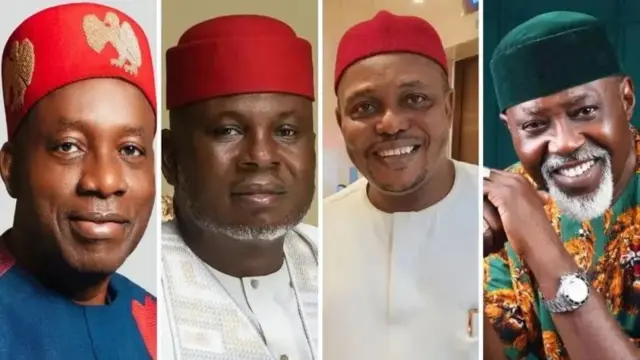
Sixteen candidates are contesting the election, led by key contenders:
- Prof. Chukwuma Charles Soludo (All Progressives Grand Alliance, APGA): the incumbent governor seeking a second term.
- Nicholas Ukachukwu (All Progressives Congress, APC): a businessman and philanthropist backed by the ruling party at the federal level.
- George Moghalu (Labour Party, LP): former managing director of NIWA, appealing to youth and reform-minded voters.
- Chioma Ifemeludike (African Action Congress, AAC): the only female candidate, running on a gender equity and social justice platform.
The stakes are high, as the outcome will shape Anambra’s political direction ahead of the 2027 general elections. The state, often regarded as the commercial heartbeat of the Southeast, holds significant influence in regional development and national politics.
Despite the importance of the poll, early reports indicate low voter turnout in several areas. Observers say apathy stems from citizens’ loss of faith in political leaders and skepticism over whether their votes will count.
A pre-election report by the CDD warned of “low competitiveness and institutional fragility,” noting that the cost of campaigning and billboard placement in Anambra has created barriers for smaller parties. Some candidates reportedly spent over ₦50 million just on local advertising permits, raising concerns about electoral fairness and inclusivity.
Analysts say the election will test the ability of INEC and security agencies to restore voter confidence following glitches experienced during mock accreditation in October.
INEC Chairman, Prof. Joash Amupitan, SAN, had earlier assured Nigerians that the Commission was taking proactive measures to resolve network challenges and logistical delays. He said all sensitive materials were deployed from the Central Bank of Nigeria’s branch in Awka to the 21 LGAs under heavy security.
“We are determined to deliver a credible election. The people of Anambra deserve nothing less,” Amupitan said on Friday during a media briefing in Awka.
The electoral umpire has also set up a situation room to monitor reports in real time and respond to complaints related to accreditation, vote counting, and result transmission.
For many residents, the election is not just about party loyalty but about who can deliver on roads, education, and youth employment.
“I’m voting for who will fix our roads and make schools functional again,” said a first-time voter in Nnewi. “We’ve heard enough of promises; it’s time for results.”
Political analysts note that the campaign season was dominated by debates over economic diversification, infrastructure renewal, and insecurity in rural communities.
The European Union Election Observation Mission (EU-EOM), the U.S. Consulate, and ECOWAS have all deployed monitors across the state. Their reports will play a critical role in shaping post-election legitimacy.
Anambra’s diaspora community has also been closely following the election, describing it as a test of whether Nigeria can hold peaceful and transparent state elections free from manipulation.
Once polls close and counting begins, attention will shift to INEC’s collation centre in Awka, where results will be announced in real time. Any disputes are expected to move swiftly to the Election Petitions Tribunal.
The outcome will determine whether Governor Soludo consolidates his developmental vision under the “Soludo Solution” plan or if voters opt for change through the APC, Labour Party, or other contenders.
Political observers believe that beyond the winner, the process itself will indicate whether Nigeria is truly advancing toward electoral transparency and citizen-driven governance.
As Anambra decides, Nigerians and indeed the world are watching. The hope is that today’s election will reaffirm faith in democratic institutions, promote credible leadership, and serve as a blueprint for peaceful elections across the country.
For millions of Anambra residents, the message remains simple: your vote is your power use it wisely.