Albania’s Prime Minister, Edi Rama, made headlines at the Berlin Global Dialogue conference when he announced that the country’s AI-powered minister, Diella, is “pregnant” with 83 children.
The statement, though dramatic, is entirely metaphorical. Rama used it to describe the rollout of 83 new artificial-intelligence assistants, each designed to help a member of parliament with their daily legislative work. The announcement was meant to highlight Albania’s push toward digital governance, not to suggest any biological possibility.
During his speech, Rama said that Diella’s “children” would act as virtual aides, monitoring sessions, summarizing debates, and even advising MPs on how to respond or whom to counter during parliamentary discussions. “If you go for coffee and forget to come back,” he joked, “this child will tell you what was said when you were gone and who you should reply to.”
From Virtual Helper to Digital Minister
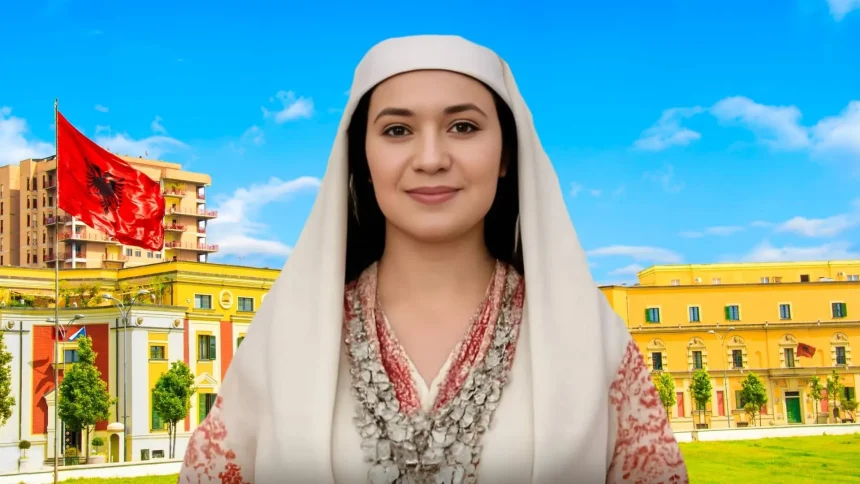
Diella, whose name means “Sun” in Albanian, first appeared as an online assistant within the government’s e-Albania portal, guiding citizens through public services. In September 2025, she was elevated to the role of Minister of State for Artificial Intelligence, tasked with overseeing digital transformation and transparency in public procurement, one of Albania’s most corruption-prone areas.
The government portrays Diella as both a symbol and a functional tool: an animated avatar with a voice, powered by an advanced AI platform capable of learning from vast data sources. According to officials, the goal is to make public decision-making more efficient and transparent, while reducing opportunities for corruption.
A Symbolic “Pregnancy”
When Rama described Diella as being “pregnant with 83 children,” he was referring to a suite of AI systems that will serve Albania’s 83 ruling-party MPs. Each assistant will be connected to a central database, the “mother” AI and will inherit Diella’s “knowledge.” These assistants are intended to enhance MPs’ productivity by providing real-time updates, personalized summaries, and even suggested talking points.
Behind the symbolism lies a serious digital-governance experiment. Albania hopes to become one of Europe’s first countries to integrate AI directly into its legislative processes. Rama has described the initiative as a way to “bring discipline, precision, and memory” to political work.
Promise and Scepticism
Despite its innovative ambition, Diella’s rise has been met with both fascination and skepticism. Supporters see it as a bold step toward modernization, while critics worry about over reliance on algorithms and question whether AI can truly solve issues like corruption.
Experts note that AI systems depend on human oversight, data quality, and algorithmic transparency, areas where governments must tread carefully. Others point out that the theatrical presentation, including the “pregnancy” metaphor, risks distracting from the project’s practical goals.
Still, the initiative signals Albania’s determination to position itself as a forward-thinking digital state, especially as it pursues European Union membership. The 83 assistants are expected to be deployed gradually through 2026.
A Digital Government Experiment
Whether Diella’s “children” transform parliamentary life or remain a symbolic gesture, the project has already succeeded in capturing global attention. It offers a glimpse into a future where virtual ministers and AI advisers could become fixtures in government, reshaping not only bureaucracy, but also how political leaders communicate, deliberate, and decide.