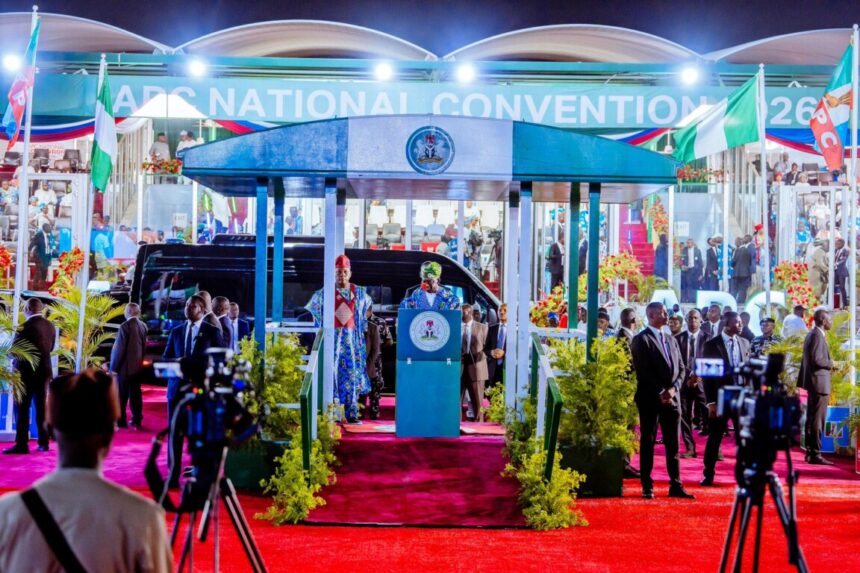
Nigeria’s ruling party, the All Progressives Congress (APC), has concluded its 8th National Convention, with Nentawe Yilwatda re-emerging as the party’s National Chairman.
The convention, held at Eagle Square, brought together over 8,000 delegates alongside top government officials and party stakeholders.
New Leadership Emerges
Alongside Yilwatda, Surajudeen Basiru emerged as National Secretary.
Other members of the National Working Committee (NWC) include:
- Felix Morka – National Publicity Secretary
- Dayo Israel – Youth Leader (retained position)
The party adopted a consensus arrangement, which delegates ratified during the convention.
In his acceptance speech, Yilwatda described his re-election as a call to service.
He pledged that the new leadership would not “fail or falter” and promised to strengthen the party while contributing to national development.
Tinubu: “Nigeria Is on the Right Track”
President Bola Ahmed Tinubu, who attended the event alongside Vice President Kashim Shettima, assured Nigerians that ongoing reforms are beginning to yield results.
According to him:
- Investor confidence is improving
- The oil and gas sector is attracting foreign investment
- Nigeria has exited the global financial “grey list”
Although he acknowledged current challenges, especially in the power sector, the president insisted that better days lie ahead.
Meanwhile, Minister of Finance Wale Edun said the economy is showing signs of recovery.
He noted that economic growth has improved to about 4% annually, up from roughly 2% before the current administration.
Similarly, Chairman of the Progressive Governors’ Forum, Hope Uzodimma, described the reforms as necessary steps toward long-term economic stability.
On the political front, Convention Planning Committee Chairman Bello Masari expressed confidence in the party’s strength.
He declared that the APC remains “number one” and is fully prepared for the 2027 general elections.
Overall, the APC convention reinforces the party’s internal unity and political positioning ahead of 2027.
While leaders highlight economic reforms and progress, the coming months will test whether these policies translate into tangible improvements for Nigerians.