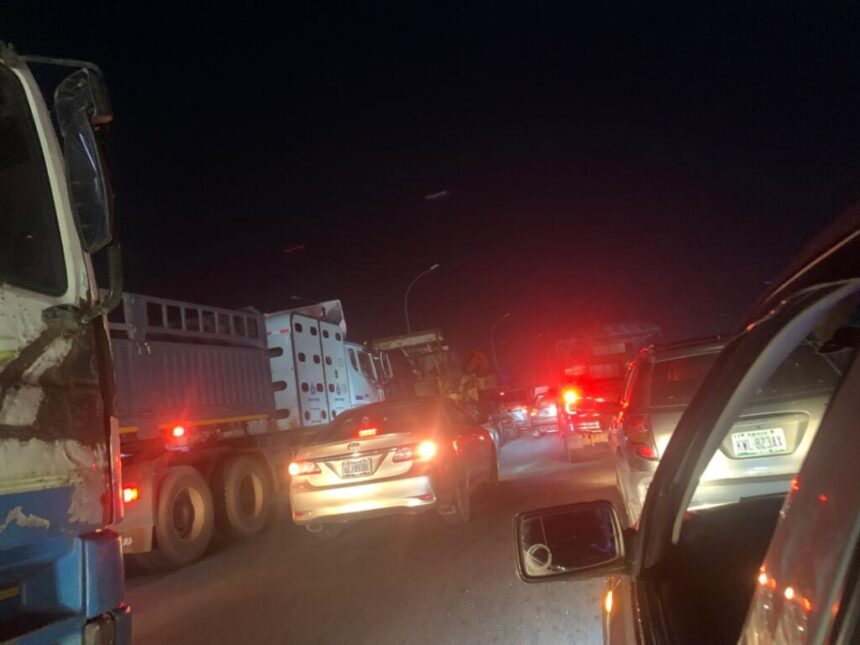
Commuters across major corridors in Abuja face persistent gridlock. The situation disrupts daily life, drains incomes, and raises safety concerns.
Key routes such as AYA, Nyanya, Mararaba, Kubwa, Zuba, Madalla, Suleja, and the Madalla-Kaduna axis remain heavily congested.
Narrow roads, poor traffic control, and ongoing construction worsen the problem. Along the Madalla–Kaduna stretch, road work by the Niger State Government has reduced traffic to one lane. This has slowed movement in and out of the Federal Capital Territory.
Rainfall often makes the situation worse. However, many residents say the gridlock is now a daily reality, especially during peak hours.
Workers spend hours on the road each day. Short trips now turn into long and exhausting journeys.
Many commuters return home late and tired, with little time to rest. Transport fares have increased as drivers adjust to longer travel times and rising fuel costs.
Some passengers now break their journeys. They stop at Madalla and switch to tricycles or motorcycles to reach areas like Gauraka and parts of Suleja.
Low-income earners face the hardest impact. Long queues, crowded vehicles, and extended waiting times have become routine.
Commuters report theft, extortion, and harassment at busy bus stops. Street touts, often called agberos, operate freely in many areas.
Some passengers say they have lost valuables, Others describe chaotic scenes as people struggle to board limited vehicles.
Weak enforcement and poor regulation have made the situation worse.
Residents are calling for urgent reforms. They want better traffic management, improved road networks, and stronger safety measures.
As congestion continues, commuting in Abuja is no longer routine. For many, it has become a daily test of endurance.