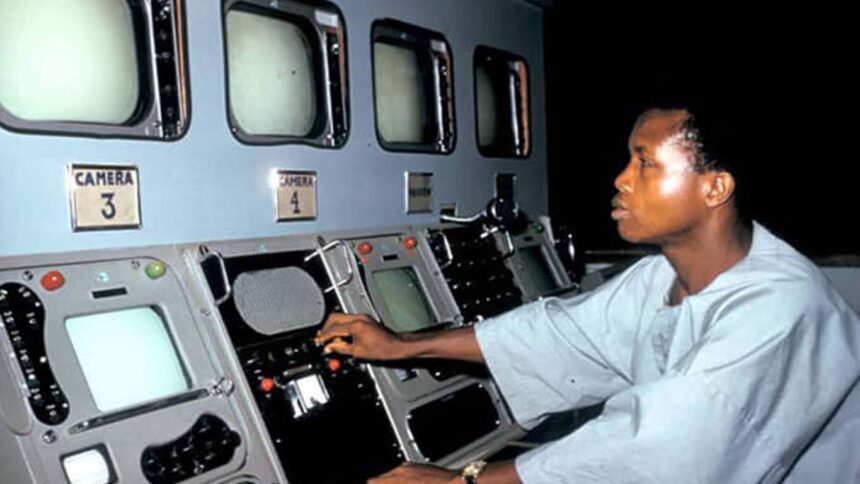
On October 31, 1959, history was made in Ibadan, southwestern Nigeria, when the Western Nigeria Television (WNTV) began broadcasting. This landmark event marked the launch of the first television station in tropical Africa, positioning Nigeria at the forefront of media innovation on the continent.
The establishment of WNTV was a bold vision of the Premier of Western Nigeria, Chief Obafemi Awolowo, who understood the transformative power of television for education, culture, and national development. Remarkably, this achievement came before Nigeria’s independence from British colonial rule in 1960, demonstrating the progressive ambitions of Nigerian leaders.
WNTV’s early broadcasts were a mix of news, educational programming, cultural shows, and entertainment. The station became a platform for showcasing Yoruba culture, Nigerian music, and homegrown talent. It set technical and professional standards that would influence broadcasting across Africa. Engineers, producers, and broadcasters trained at WNTV went on to establish television services in other African nations, spreading Nigerian expertise across the continent.
The success of WNTV sparked rapid expansion of television in Nigeria. Within years, other regions launched their own stations: the Eastern Nigeria Television Service (1960) and Radio Television Kaduna (1962). This early adoption of television technology reflected Nigeria’s openness to modernization and its determination to control its own narrative through media.
Today, Nigeria boasts hundreds of television stations and remains a media powerhouse in Africa. But it all started in Ibadan in 1959, when WNTV’s first broadcast flickered to life, illuminating the future of African broadcasting.