The Secretary-General of the World Customs Organisation (WCO), Ian Saunders, has described Nigeria’s Time Release Study (TRS) as a critical reform tool capable of improving border efficiency, strengthening trade competitiveness across African trade corridors and enhancing national security.
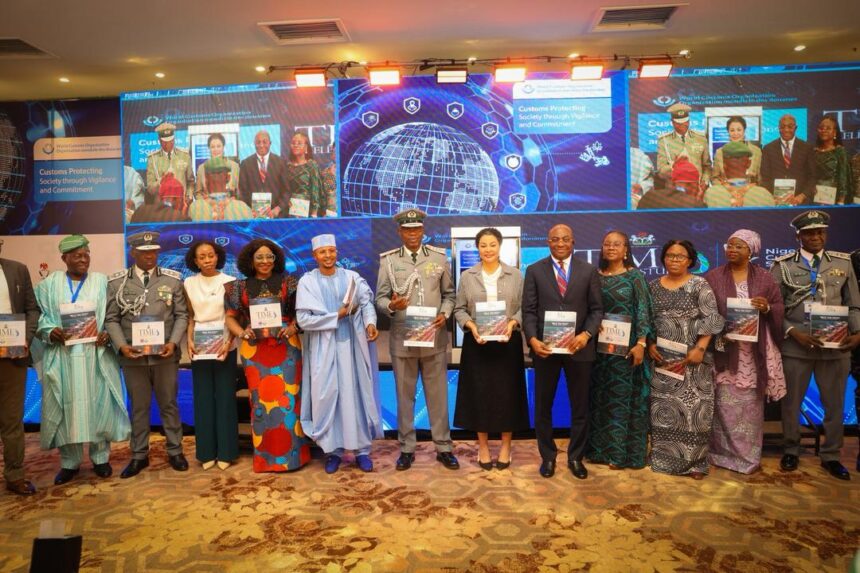
Saunders made the remark on Monday, January 26, 2026, during the presentation of the TRS Report at Tin Can Island Port, Lagos. He noted that the study provides Nigeria with “specific and objective insights” into the performance of its cargo clearance processes and highlights targeted areas for improvement.
According to him, the TRS, implemented with the support of the WCO Accelerate Trade Facilitation Programme, translates reform policies into measurable operational outcomes.
“The findings of this study provide Nigeria with a clear opportunity to deliver equally clear improvements that will strengthen both the economy and the safety of the country,” Saunders said.
Read Also: WCO, World Bank Train Nigeria Customs on Post-Clearance Audit
He explained that the Time Release Study is one of the WCO’s core performance measurement tools used globally to enhance transparency, predictability and efficiency in border operations without compromising security.
The WCO chief further stressed that effective implementation of TRS recommendations requires collaboration among government agencies, private sector stakeholders and the broader trading community.
“Trade facilitation is not achieved by policy alone. It is realised through consistent, efficient and sound practices. The Time Release Study shows what is working, what is not, and where leadership and investment are required,” he added.
Delivering a keynote address, the Minister of State for Finance, Doris Uzoka-Anite, said the Time Release Study aligns with the Federal Government’s commitment to data-driven reforms aimed at reducing transaction costs and improving trade efficiency across Nigeria’s ports and borders.
She described the TRS as a strategic policy instrument that enables authorities to measure performance objectively, identify bottlenecks and improve transparency within the trade ecosystem.
“The Time Release Study is not merely a diagnostic exercise; it is a reform tool that supports smarter regulation, evidence-based decision-making and improved coordination across border agencies,” the Minister said.
Uzoka-Anite noted that efficient clearance procedures are vital to investor confidence and economic growth, adding that competitiveness in global trade is increasingly determined by speed, certainty and regulatory compliance.
Also speaking, the Minister of Industry, Trade and Investment, Dr Jumoke Oduwole, commended the Nigeria Customs Service for addressing systemic bottlenecks and strengthening trade facilitation processes, describing the initiative as a demonstration of government commitment to improving Nigeria’s trade environment.
In his remarks, the Comptroller-General of Customs, Adewale Adeniyi, said the Nigeria Customs Service is institutionalising the Time Release Study as part of its ongoing reform agenda to enhance cargo clearance efficiency and service delivery.
He explained that the study provides reliable data on cargo dwell time, helping Customs and partner agencies to identify procedural overlaps, eliminate delays and streamline clearance operations.
“The Time Release Study allows us to move from assumptions to facts. It tells us exactly where time is lost and where reforms must be focused to achieve measurable improvements,” Adeniyi said.
He reaffirmed the Service’s commitment to facilitating legitimate trade while maintaining strict compliance and security standards.
Similarly, a representative of the United Kingdom High Commission to Nigeria commended the Nigeria Customs Service for adopting WCO trade facilitation tools, noting that the TRS initiative is supported by His Majesty’s Revenue and Customs (HMRC).
Meanwhile, the Deputy Comptroller-General in charge of Strategic Research and Policy, Dera Nnadi, said the findings of the study would guide operational reforms, policy adjustments and infrastructure planning as the Service works with stakeholders to create a more predictable and efficient trade environment.