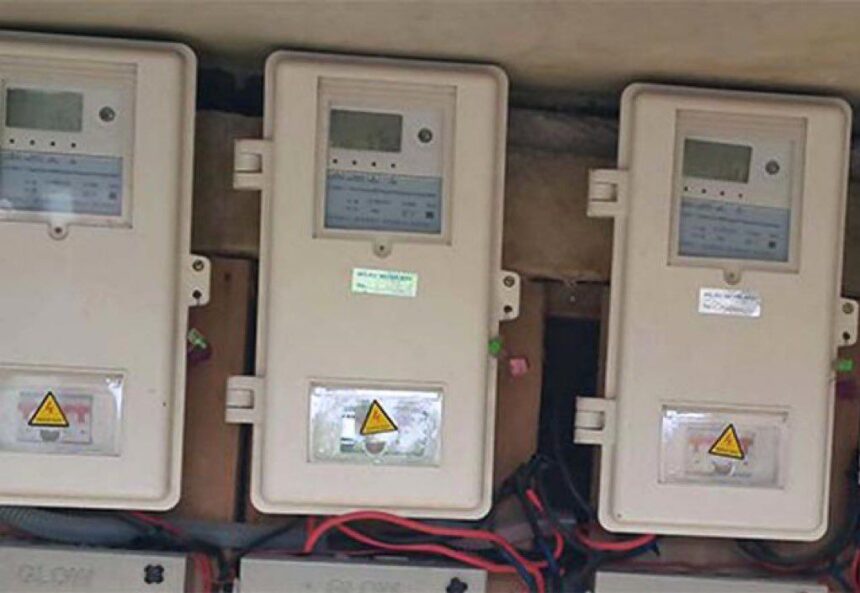
The Nigerian Government has banned electricity distribution companies, known as DisCos, and their installers from collecting any form of payment for electricity meter installation.
The government warned that any official or contractor found extorting customers will be prosecuted.
The Minister of Power, Adebayo Adelabu, gave the warning during an inspection of newly imported smart meters at APM Terminals in Apapa, Lagos.
Adelabu said the meters were bought under the World Bank–funded Distribution Sector Recovery Programme, also called DISREP, and must be installed free of charge.
He stressed that no consumer should pay a kobo for a meter, according to the minister, demanding money for installation is now a criminal offence.
While giving update on the program, Adelabu disclosed that nearly one million meters have already arrived in Nigeria out of the 1.43 million expected in the first phase of the programme, another batch of about 500,000 smart meters have been received, while over 150,000 meters have already been installed across the country.
The minister said the goal is to end estimated billing and make electricity charges transparent and fair.
On his part, The Director-General of the Bureau of Public Enterprises, Ayo Gbeleyi, said the bureau is coordinating the programme, adding that NERC will soon issue a new circular to guide DisCos on how to allow easy access for meter installations.
Adelabu admitted that many Nigerians are still worried because of past experiences with delayed or paid meters, but he said the situation has changed.
The minister also visited the National Meter Test Station in Oshodi, where the Nigerian Electricity Management Services Agency tests meters to ensure quality and safety. Nigeria currently has over five million electricity customers on estimated billing, and the minister said the government is committed to metering every home, business, and institution in the country.