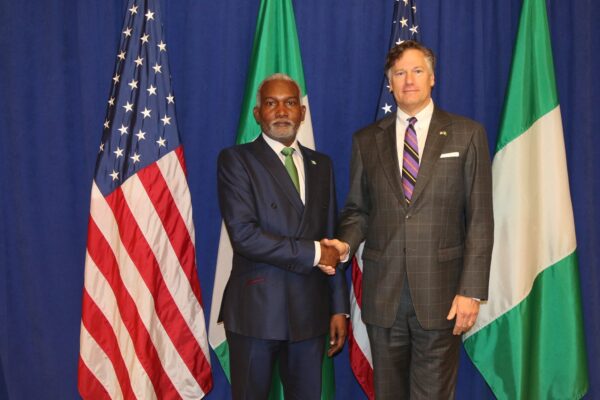
The United States has announced plans to spend ₦587 billion (about $413.046 million) on counter-insurgency and security operations in Nigeria and other African countries in 2026, as worsening insecurity continues to threaten stability across West Africa and the Sahel.
The proposed expenditure is part of Washington’s broader security and defence assistance strategy aimed at combating terrorism, violent extremism, and transnational criminal networks spreading across the region. The funding is expected to support operations against groups such as Boko Haram, ISWAP, and other insurgent and extremist factions, particularly in Nigeria and neighbouring countries.
West Africa has witnessed a sharp deterioration in security in recent years, with increased attacks, mass displacement, and growing pressure on national militaries. Analysts say the US move reflects concerns that instability in the region could have global security implications, including terrorism spillovers and humanitarian crises.
Although a detailed country-by-country breakdown has not yet been made public, the funds are expected to cover:
- Military training and advisory support
- Intelligence sharing and surveillance
- Logistics, equipment, and operational assistance
- Capacity building for regional security forces
Nigeria, which continues to battle insurgency in the North-East, banditry in the North-West, and other security threats nationwide, is expected to be a major beneficiary.
Nigeria remains a key partner in US security cooperation in Africa. Despite sustained military operations, insurgent groups continue to mount attacks on civilian communities, security forces, and critical infrastructure.
Security experts say external support when aligned with domestic strategy can help strengthen counter-insurgency efforts, but warn that military spending alone cannot resolve deep-rooted governance, economic, and social drivers of conflict.
The planned spending comes amid shifting geopolitical dynamics in Africa, including:
- Military takeovers in parts of the Sahel
- Growing influence of non-Western security partners
- Strained relations between some West African governments and traditional allies
The US funding signals Washington’s intent to maintain strategic influence in the region while supporting efforts to curb the spread of extremism.
As West Africa grapples with one of its most challenging security periods in decades, the US plan to invest ₦587 billion in counter-insurgency operations underscores the scale of concern over the region’s stability. How effectively the funds translate into improved security on the ground will depend on coordination with local governments, accountability, and a broader approach that combines military action with development and governance reforms.