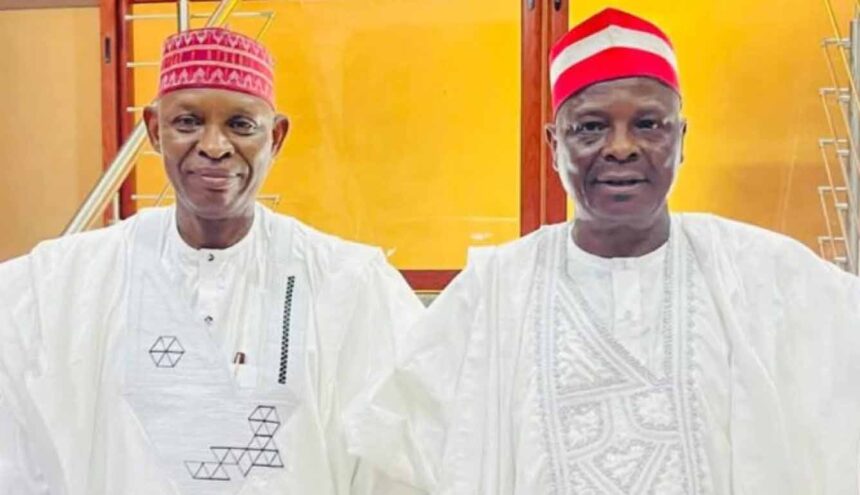
The political relationship between Rabiu Musa Kwankwaso and Abba Kabir Yusuf, once defined by loyalty and mentorship, has entered a tense and uncertain phase. What began as a strong alliance that delivered victory in Kano State in 2023 is now unfolding into one of the most consequential political confrontations in Northern Nigeria ahead of 2027.
From Political Fatherhood to Power Struggle
Kwankwaso, a former governor and long-time political heavyweight in Kano, was instrumental in Abba Yusuf’s emergence as governor under the New Nigeria Peoples Party (NNPP). Yusuf was widely seen as a product of the Kwankwasiyya political movement, built and sustained by Kwankwaso over decades.
For months after assuming office, Governor Yusuf appeared firmly aligned with his political benefactor. However, cracks began to show as governance realities, party control, and future electoral strategies came into play.
The Trigger: Control, Loyalty, and Defection Rumours
The current crisis is largely driven by rumours and signals that Governor Yusuf may be seeking greater political independence, including possible realignment ahead of the 2027 elections. This has clashed directly with Kwankwaso’s insistence on ideological loyalty and party discipline.
Kwankwaso has openly criticised any attempt by the governor to defect or weaken the NNPP structure in Kano, arguing that political mandates belong to the party and the movement, not individuals. On the other hand, allies of Governor Yusuf argue that as an elected governor, he must assert authority and make strategic decisions in his own political interest.
NNPP Split and Competing Claims to Leadership
The tension quickly escalated into an internal party conflict. Factions within the NNPP have taken opposing positions, with some reaffirming Kwankwaso’s status as the party’s national figurehead, while others moved to elevate Governor Yusuf’s role within the party hierarchy.
This internal struggle has effectively split the NNPP in Kano into rival camps, weakening party cohesion and raising questions about who truly controls the party’s future in the state.
More Than Personal Differences
Beyond personalities, the saga reflects a broader shift in Nigerian politics: governors increasingly resisting godfatherism once in power. What is playing out in Kano mirrors a national pattern where political protégés seek autonomy, often at the expense of their benefactors.
For Kwankwaso, the conflict threatens the dominance of the Kwankwasiyya movement. For Yusuf, it is a test of whether he can transition from being seen as a political successor to an independent power broker.
What This Means for Kano and 2027
Kano remains one of Nigeria’s most politically significant states, and any fracture among its leaders has national implications. If unresolved, the Kwankwaso–Yusuf rift could reshape party alliances, voter loyalties, and electoral outcomes well before 2027.
The saga between Rabiu Musa Kwankwaso and Governor Abba Kabir Yusuf is no longer a quiet disagreement; it is a defining political battle over influence, loyalty, and the future of Kano politics. Whether it ends in reconciliation or permanent separation will not only determine the fate of the NNPP in Kano but could also redraw the political map of Northern Nigeria.