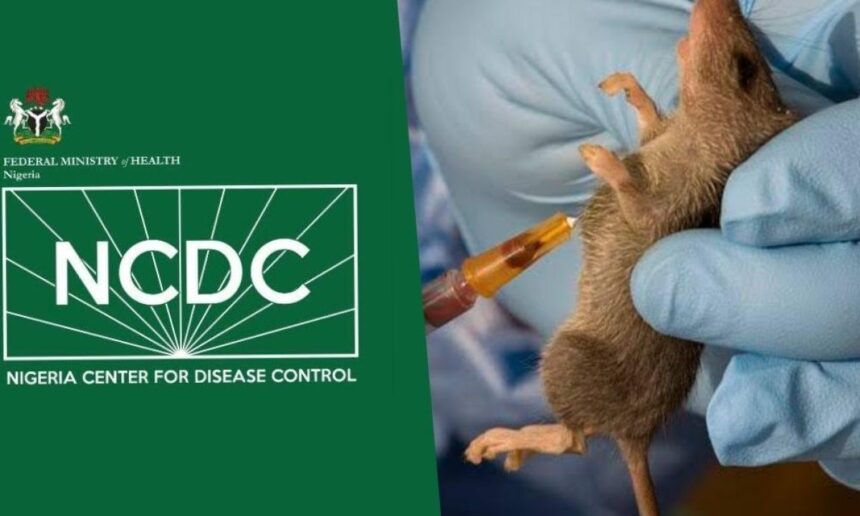
Nigeria’s battle with Lassa fever remained intense throughout 2025, with the Nigeria Centre for Disease Control and Prevention (NCDC) confirming 1,119 cases nationwide, underscoring the persistent public health threat posed by the viral disease.
The disclosure was made in the NCDC’s Lassa Fever Situation Report for Epidemiological Week 51, covering December 15 to 21, 2025.
The report paints a sobering picture of the disease’s spread, impact, and the demographic groups most affected across the country.
Young adults emerged as the most vulnerable population, with individuals aged 21 to 30 accounting for the highest number of confirmed infections.
The median age of patients stood at 30 years, reflecting the heavy toll on Nigeria’s economically active population and raising concerns about productivity losses and long-term socio-economic implications.
Gender analysis showed that males were slightly more affected than females, a trend the NCDC linked to possible differences in occupational exposure, lifestyle patterns, and health-seeking behaviour in communities where Lassa fever is endemic.
The human cost has been significant, as a total of 206 deaths were recorded among confirmed cases in 2025, resulting in a case fatality rate of 18.4 per cent. This figure is notably higher than the 16.4 per cent recorded during the same period in 2024, highlighting ongoing challenges in early detection and effective treatment.
Geographically, the outbreak remained heavily concentrated. Four states Ondo, Bauchi, Edo, and Taraba accounted for 88 per cent of all confirmed cases, with Ondo State alone contributing 35 per cent. Overall, 21 states across 105 Local Government Areas reported at least one confirmed case, reflecting the disease’s wide but uneven spread.
Despite a modest decline in new infections during Week 51, when 21 confirmed cases and five deaths were reported, the NCDC warned against complacency.
It identified late presentation at health facilities, high treatment costs, poor sanitation, and weak community health-seeking behaviour as major obstacles to outbreak control.
As Nigeria moves into another high-risk season, the NCDC has renewed its call for vigilance.
Healthcare workers have been urged to maintain a high index of suspicion, while state governments are encouraged to strengthen risk communication, environmental sanitation, and community engagement.
With Lassa fever still exacting a heavy toll, the agency says a coordinated, multi-sectoral response remains critical to reducing deaths and limiting future outbreaks.