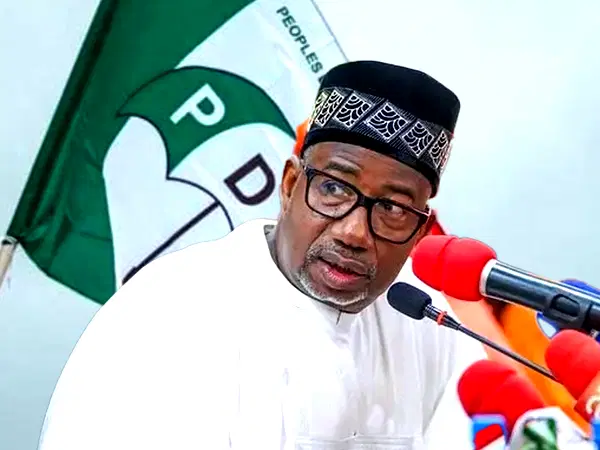
A public clash between Bauchi State Governor Bala Mohammed and the Minister of the Federal Capital Territory, Nyesom Wike, has escalated into a contentious national political debate, raising questions about federal influence, intra‑party rivalry and the role of security agencies in political disputes.
In a televised interview on Channels Television’s Sunrise Daily, Governor Mohammed accused Wike of orchestrating a targeted campaign to undermine his leadership, allegations that intersect with broader tensions within the opposition Peoples Democratic Party (PDP) and Nigeria’s political landscape.
Claims of Political Targeting and Institutional Abuse
Mohammed said he believes the opposition to his administration is not organic or legal, but instead part of a “calculated effort” to damage his reputation and force realignment with the ruling All Progressives Congress (APC). The governor suggested Wike is leveraging federal institutions, including petitions to the courts and alleged influence within the anti‑graft Economic and Financial Crimes Commission (EFCC) to pressure him and key members of his government.
One flashpoint is a federal terrorism financing case involving the Bauchi State Commissioner for Finance, Yakubu Adamu, in which Mohammed’s name appears in charge sheets filed by the EFCC. Mohammed dismissed the allegations as politically motivated and part of an attempt to discredit him as a leading opposition figure ahead of upcoming elections.
Wike’s Sharp Rebuttal and Call to Focus on Local Issues
Wike has strongly rejected the governor’s accusations. Speaking during an engagement in Rivers State, the FCT minister described Mohammed’s claims as unfounded and a distraction from his own political and administrative challenges. Wike insisted he has no authority over EFCC operations, which he characterized as independent and governed by law not political influence.
Addressing the suggestion that he threatened to “put fire” in Bauchi State, Wike challenged Mohammed to “face his problems” rather than attribute them to imagined influence. He also referenced Mohammed’s own record within the PDP, suggesting internal party disputes are a key factor in the public showdown. Underlying PDP Rift and Power Struggle
Analysts say this clash illustrates deeper fractures within the PDP. The party has been grappling with internal leadership battles and defections to rival parties since its loss in the 2023 presidential election. Both Wike and Mohammed have been prominent figures in these disputes, often taking opposing stances on leadership direction and strategy.
Mohammed has labelled Wike as an “undertaker with divided loyalties,” suggesting that his influence within the party undermines unity and accountability. Wike, for his part, has mocked the governor’s assertions as politically expedient and lacking evidence.
EFCC Responds: Independent and Non‑Partisan
The EFCC has publicly dismissed claims that it is being used as a tool against Mohammed, stressing that the commission acts independently in its investigations and prosecutions. In a statement, the agency called the allegations “baseless” and urged political leaders to focus on governance rather than attributing enforcement actions to political gamesmanship.
The commission noted that Mohammed faced a separate money laundering case before his election as governor and argued that such legal history is a relevant factor in current probes.
What began as a personal accusation now reflects larger dynamics in Nigeria’s political environment: the fraught relationship between federal power and state authority, the role of anti‑corruption institutions in political narratives, and intra‑party tensions within the opposition ranks.
With national elections on the horizon, the standoff between Bala Mohammed and Nyesom Wike highlights how legal action, media narratives and political rivalries converge to shape public perception and political strategy.