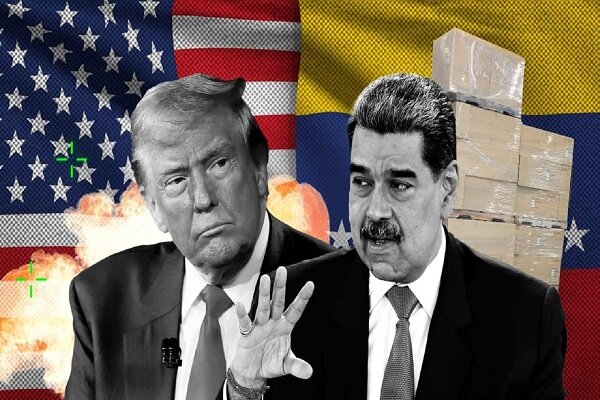
The relationship between Venezuela and the United States has for years stood as one of the clearest examples of how geopolitics, ideology, and economic interests collide on the global stage. Framed publicly as a battle between democracy and authoritarianism, the Venezuela-USA standoff has instead evolved into a complex web of sanctions, political brinkmanship, and humanitarian consequences that continue to shape the lives of millions of ordinary Venezuelans.
At the heart of the crisis is Washington’s refusal to recognise the legitimacy of Venezuela’s political leadership under Nicolás Maduro, coupled with sweeping economic sanctions designed to force political change. The United States insists these measures are necessary to restore democracy, curb corruption, and protect human rights. Venezuela, on the other hand, describes the sanctions as economic warfare an attack on its sovereignty and an intentional strangulation of its economy.
Sanctions imposed on Venezuela’s oil sector- the backbone of its economy -have drastically reduced government revenue, limited access to foreign exchange, and worsened shortages of food, medicine, and basic services. While U.S. officials argue that humanitarian exemptions exist, reports from the United Nations, humanitarian groups, and independent economists have consistently shown that broad sanctions deepen suffering, weaken institutions, and rarely produce the desired political outcomes.
History offers sobering lessons. From Cuba to Iraq, sanctions have proven more effective at punishing populations than toppling entrenched political elites. In Venezuela’s case, sanctions have arguably strengthened the ruling establishment by allowing it to externalise blame, rally nationalist sentiment, and justify tighter political control.
Yet, this does not absolve Venezuela’s leadership of responsibility. Years of economic mismanagement, corruption, and institutional decay preceded the sanctions and laid the groundwork for the crisis. Hyperinflation, collapsing infrastructure, and mass migration were already visible warning signs. The tragedy of Venezuela is not caused by one actor alone it is the product of internal failures compounded by external pressure.
What makes the Venezuela-USA dynamic particularly troubling is the selective application of democratic standards. Washington maintains close relationships with governments whose democratic credentials are questionable, so long as strategic or economic interests align. This inconsistency fuels accusations of hypocrisy and weakens the moral authority of U.S. foreign policy.
Recent quiet engagements between Washington and Caracas, including limited sanctions relief tied to electoral commitments, suggest an unspoken acknowledgment that isolation has failed. Dialogue, however imperfect, has yielded more progress than confrontation. The challenge is ensuring that negotiations prioritise Venezuelan citizens rather than geopolitical score-keeping.
A sustainable path forward requires three realities to be confronted. First, sanctions alone cannot engineer democracy. Second, Venezuelan institutions must be rebuilt through credible electoral processes and accountability. Third, global powers must resist the temptation to instrumentalise human rights rhetoric while ignoring its consequences.
Venezuela does not need to be a battleground for ideological supremacy. It needs economic breathing space, political reform driven by its people, and international engagement rooted in consistency rather than coercion.
Until the United States reconciles its democratic ideals with its strategic behavior and until Venezuela’s leaders accept genuine political responsibility the stalemate will persist, and the Venezuelan people will continue paying the highest price.
The Venezuela-USA relationship is less a moral contest than a cautionary tale. It reminds the world that power, when detached from accountability and empathy, rarely delivers justice only prolonged suffering.