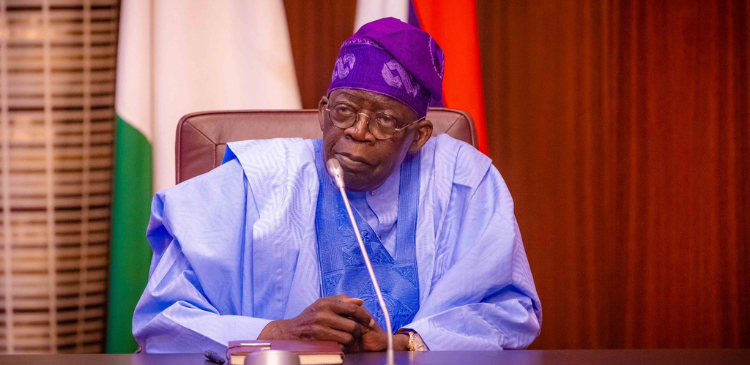
President Bola Ahmed Tinubu has presented a ₦58.47 trillion 2026 Appropriation Bill to the National Assembly, outlining an ambitious spending plan anchored on security, infrastructure development, and human capital investment, amid ongoing economic reforms and fiscal adjustments.
The budget presentation, delivered during a joint sitting of the Senate and House of Representatives, sets out key economic assumptions and sectoral allocations that will guide government spending in the 2026 fiscal year.
A major highlight of the 2026 budget is the allocation of ₦5.41 trillion to defence and security, reaffirming the administration’s focus on tackling insecurity across the country, including insurgency, banditry, kidnapping, and oil infrastructure sabotage.
The President said the defence allocation is aimed at strengthening military capacity, improving intelligence operations, enhancing personnel welfare, and safeguarding Nigeria’s territorial integrity.
Under the proposed 2026 spending framework, several critical sectors received substantial funding:
- Defence and Security: ₦5.41 trillion
- Infrastructure: ₦3.56 trillion
- Education: ₦3.52 trillion
- Health: ₦2.48 trillion
The infrastructure allocation is expected to support ongoing road, rail, housing, power, and other capital projects, while increased funding for education and health reflects the government’s stated commitment to human capital development.
The total proposed expenditure of ₦58.47 trillion is divided as follows:
- Capital Expenditure: ₦26.08 trillion
- Recurrent (Non-Debt) Expenditure: ₦15.25 trillion
The balance of the budget is expected to cover debt servicing and statutory transfers, details of which will be further examined during legislative scrutiny.
The sizeable capital component signals the government’s intention to drive economic growth through project execution and public investment, even as it manages recurrent obligations.
President Tinubu anchored the budget on conservative but strategic macroeconomic projections, including:
- Crude oil benchmark price: US$64.85 per barrel
- Daily oil production: 1.84 million barrels per day
- Exchange rate: ₦1,400 to the US dollar
The oil price benchmark and production target reflect the government’s expectations of improved output and stability in the global energy market, while the exchange rate assumption aligns with ongoing foreign exchange reforms.
In his address, the President noted that the 2026 budget was crafted to consolidate economic reforms, stabilise public finances, and stimulate inclusive growth, while protecting vulnerable Nigerians from economic shocks.
He stressed that security remains the foundation of development, arguing that investments in infrastructure, education, and health can only deliver results in a safe and stable environment.
Following its presentation, the 2026 Appropriation Bill has been referred to the National Assembly for detailed consideration. Lawmakers are expected to subject the proposal to clause-by-clause review, sectoral defence by ministries, departments and agencies, and possible adjustments before passage.
The budget debate is likely to focus on revenue projections, borrowing plans, debt sustainability, and the effectiveness of past budget implementation.
As deliberations continue, Nigerians will be watching closely to see whether the ambitious allocations translate into:
- Improved security nationwide
- Faster delivery of infrastructure projects
- Better funding outcomes in education and healthcare
- Greater macroeconomic stability
The final shape of the 2026 budget will emerge after legislative harmonisation and presidential assent.