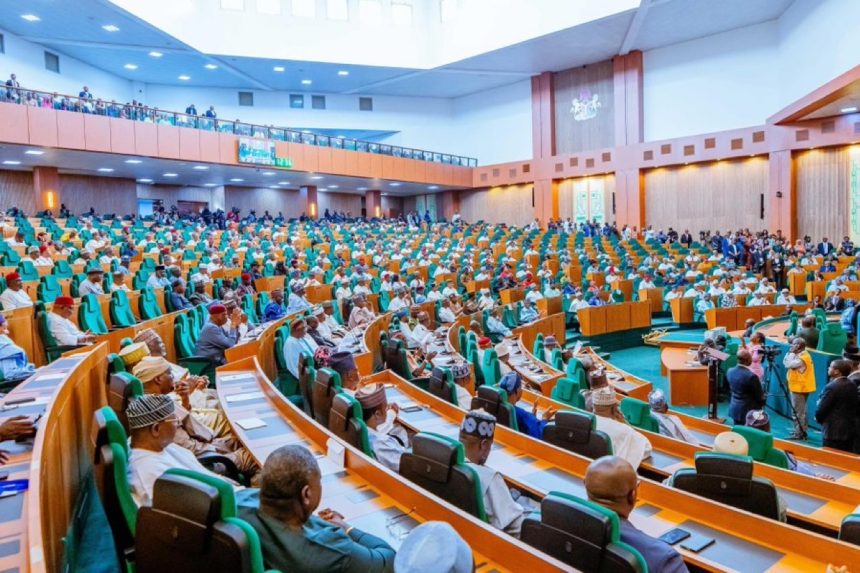
Nigeria’s House of Representatives has approved a major upward review of campaign spending limits for candidates contesting elective offices, a move that could significantly reshape the country’s electoral financing landscape ahead of future polls.
The decision was taken during deliberations on amendments to the Electoral Act, with lawmakers arguing that inflation, rising campaign costs, and the realities of modern electioneering made the existing limits unrealistic and outdated.
Under the approved amendment, the campaign expenditure ceilings for candidates have been increased as follows:
- Presidential candidates:
- Initial limit: ₦5 billion
- New limit: ₦10 billion
- Governorship candidates:
- Initial limit: ₦1 billion
- New limit: ₦3 billion
- Senatorial candidates:
- Initial limit: ₦100 million
- New limit: ₦500 million
- House of Representatives candidates:
- Initial limit: ₦70 million
- New limit: ₦250 million
- State House of Assembly candidates:
- Initial limit: ₦30 million
- New limit: ₦100 million
- Local Government Chairmanship candidates:
- Initial limit: ₦30 million
- New limit: ₦100 million
- Councillorship candidates:
- Initial limit: ₦5 million
- New limit: ₦10 million
In addition, the House approved a provision stipulating that no individual or corporate entity may donate more than ₦500 million to any single candidate.
Lawmakers backing the amendment said the previous spending caps no longer reflected economic realities, citing inflation, logistics, media costs, security, and the expansive nature of political campaigns across Nigeria’s vast geography.
Supporters argued that unrealistic ceilings often led to widespread violations, weak enforcement, and opaque funding practices. By increasing the limits, they say, the law would better align with actual campaign expenditures while allowing for more transparent monitoring by the Independent National Electoral Commission (INEC).
A lawmaker involved in the process noted that:
“Campaigns have evolved. Media engagement, digital outreach, security, and logistics all cost significantly more today. Retaining old limits only encourages circumvention of the law.”
Despite these arguments, the development has sparked concerns among civil society groups, opposition parties, and election observers, who fear the new limits could further entrench money politics in Nigeria’s democracy.
Critics argue that raising spending ceilings may:
- Favour wealthy candidates and political godfathers
- Marginalise young people, women, and grassroots contenders
- Increase the influence of private money and special interests in governance
They warn that without strict enforcement mechanisms, the amendments could widen inequality in political participation and undermine the credibility of elections.
Proponents of the amendment, however, point to the ₦500 million donation cap as a critical safeguard against undue influence. The provision is intended to:
- Limit the dominance of single donors
- Reduce the risk of policy capture by powerful individuals or corporations
- Strengthen transparency in campaign financing
INEC is expected to play a central role in enforcing compliance through financial disclosures, audits, and sanctions for violations.
The approved changes are part of broader Electoral Act amendments still undergoing legislative consideration. The bill must:
- Be harmonised with the Senate’s version
- Be passed by both chambers of the National Assembly
- Receive presidential assent before becoming law
If signed, the revised spending limits would apply to future general elections, not retroactively.
Analysts say the amendment could fundamentally alter campaign strategies, political fundraising, and party dynamics. While it may reduce under-the-table spending, they stress that strong enforcement, transparency, and public accountability will determine whether the reform strengthens or weakens Nigeria’s democratic process.
As the debate continues, Nigerians are watching closely to see whether electoral reforms will truly promote fair competition or deepen the role of money in politics.