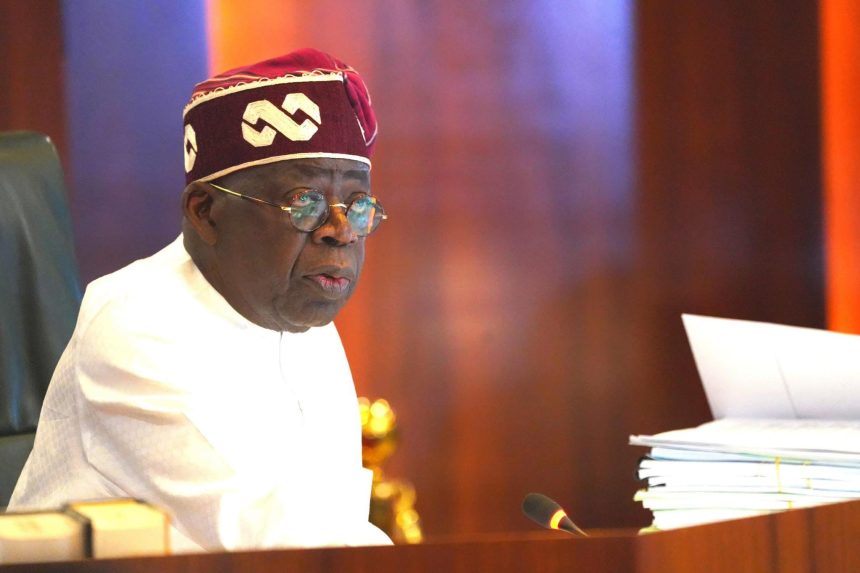
President Bola Ahmed Tinubu is set to present the 2026 Appropriation Bill before a joint session of the National Assembly (NASS), following a formal request to the Senate seeking approval for the presentation of the annual budget.
The proposed budget presentation is scheduled for 2:00 p.m., according to a letter transmitted to the upper chamber and read during plenary by Senate President Godswill Akpabio. In the letter, President Tinubu expressed his intention to lay the 2026 budget before both chambers of the National Assembly, in line with constitutional provisions.
However, the proposed timing has sparked concerns among some lawmakers, particularly over its coincidence with Muslim prayer hours. Several senators urged that the schedule be reconsidered to accommodate religious obligations and ensure full participation by members.
Responding to the concerns, Akpabio assured lawmakers that the matter would be addressed. He pledged to consult with the President on the timing and explore possible adjustments to avoid clashes with prayer periods.
The presentation of the 2026 budget comes as Nigeria continues to grapple with economic reforms, fiscal pressures, and efforts to stabilise growth amid global and domestic challenges.
President Tinubu’s upcoming presentation will follow a series of expansive fiscal proposals since assuming office in May 2023.
On December 18, 2024, the President presented a ₦49.7 trillion budget proposal for 2025 before a joint session of the National Assembly. The proposal represented a significant increase compared to previous years, reflecting the administration’s reform-driven spending priorities.
Key highlights of the 2025 budget included:
• Defence and Security: ₦4.91 trillion
• Infrastructure: ₦4.06 trillion
• Education: ₦3.5 trillion
• Health: ₦2.4 trillion
The 2025 proposal was about ₦20 trillion higher than the 2024 budget, underscoring the government’s push for aggressive fiscal intervention to address security, infrastructure deficits, and social development.
In December 2023, Tinubu presented his first budget the 2024 Appropriation Bill pegged at ₦27.5 trillion. During legislative review, the National Assembly increased the proposal by ₦1.2 trillion, eventually approving a ₦28.7 trillion budget for the 2024 fiscal year.
In the 2025 budget framework, the President pegged crude oil production at 2.06 million barrels per day, reflecting optimism around improved security in oil-producing regions and increased operational efficiency.
He also projected a reduction in the importation of finished petroleum products, alongside a rise in the export of refined petroleum products, driven largely by domestic refining capacity, including the Dangote Refinery and modular refineries across the country.
President Tinubu reiterated his administration’s commitment to economic renewal, stating that recent reforms were beginning to yield results.
“The reforms are yielding results, no reversals,” the President said, expressing confidence that Nigeria’s economy was responding positively to government stimulus measures.
While acknowledging persistent challenges, Tinubu described corruption and insecurity as existential threats to national development but insisted they were not insurmountable.
“These challenges are surmountable when we work collaboratively. We must rewrite the narrative of this nation,” he said.
He added emphatically:
“The time for lamentation is over. The time to act is now.”
Although full details of the 2026 budget proposal are yet to be made public, analysts expect continuity in Tinubu’s reform agenda, with sustained focus on:
• Security and defence spending
• Infrastructure expansion
• Social services, including health and education
• Economic diversification and non-oil revenue growth
The National Assembly’s consideration of the budget will once again test executive-legislative collaboration amid public expectations for improved living standards and economic stability.