
Australia has announced a sweeping national gun buyback scheme following the deadly shooting at Bondi Beach, as the country once again confronts the trauma of mass gun violence and renews its commitment to strict firearm control.
Prime Minister Anthony Albanese made the announcement on Friday, declaring that the government would act decisively to “get guns off our streets,” even as hundreds of Australians gathered at Bondi Beach, plunging into the ocean in a solemn tribute to the victims.
The attack, which occurred on Sunday during a Jewish cultural festival at the famed Sydney surf beach, left 15 people dead, making it one of the deadliest mass shootings in Australia’s modern history. Authorities allege that Sajid Akram, 50, and his son Naveed Akram opened fire on festival attendees, shocking a nation long regarded as a global model for gun control.
Albanese said the proposed buyback would be the largest since 1996, when Australia introduced landmark gun reforms following the Port Arthur massacre, in which 35 people were killed.
Under the new scheme, the federal government will compensate gun owners who surrender:
• Surplus firearms
• Newly banned weapons
• Illegal guns
The Prime Minister said the objective was clear: to reduce the number of high-powered weapons in civilian hands and prevent future tragedies.
“There is no reason someone living in the suburbs of Sydney needed this many guns,” Albanese said, referring to allegations that Sajid Akram legally owned six high-powered rifles.
Albanese acknowledged that existing regulations had failed to prevent the suspect from accumulating such an arsenal, vowing to tighten loopholes that allowed access to military-style firearms.
“This tragedy has exposed gaps that must be closed,” he said. “Australia has done this before, and we will do it again.”
While full legislative details are yet to be released, officials say the reforms will focus on:
• Stricter licensing requirements
• Tighter limits on the number of firearms an individual can own
• Enhanced background and mental health checks
• Stronger penalties for illegal possession
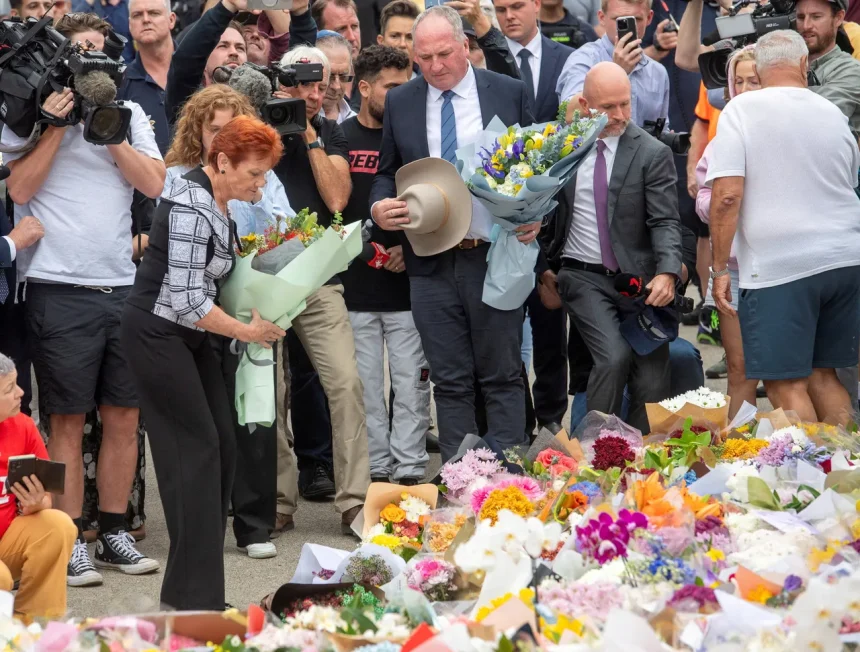
The announcement came as hundreds of swimmers gathered at Bondi Beach, many dressed in black or carrying flowers, entering the ocean in silence to honour the victims.
The vigil underscored the profound national grief and renewed debate over gun ownership in a country that has largely avoided mass shootings for nearly three decades following the Port Arthur reforms.
Community leaders described the gathering as a powerful reminder of the human cost of gun violence, even in nations with strict laws.
Australia’s 1996 reforms are widely credited with dramatically reducing gun deaths and mass shootings, and the country has not experienced a comparable tragedy until the Bondi attack.
According to academic and government studies, the Port Arthur buyback removed more than 650,000 firearms from circulation and was followed by a steep decline in firearm-related deaths.
Experts say the new proposal signals Australia’s determination to preserve that legacy, even as global gun violence trends rise.
“Australia’s response then became a model for the world,” said one public policy analyst. “This latest move reinforces the idea that gun reform is not a one-off event but an ongoing responsibility.”
Early public reaction has shown broad support for the buyback, with civil society groups, religious leaders, and victims’ advocates welcoming the government’s swift action.
Opposition figures have also signalled cautious backing, suggesting a rare moment of bipartisan unity in the face of national tragedy.
However, gun-owner groups have raised concerns about compensation levels and implementation timelines, calling for consultations to ensure fairness and transparency.
The government is expected to present draft legislation in the coming weeks, with funding provisions to be included in the next federal budget.
If implemented as planned, the scheme would once again place Australia at the forefront of global gun control policy, reinforcing the principle that public safety outweighs private gun ownership.
As the country mourns the Bondi victims, the government’s message is clear: Australia will not normalise mass shootings.