
Asian stock markets climbed on Friday, snapping a volatile run for global equities, after US inflation cooled more than expected, boosting optimism for another interest rate cut by the Federal Reserve, while strong earnings from US chipmaker Micron Technology helped calm fears of an overheating technology sector.
The upbeat sentiment followed fresh data showing that US inflation slowed last month to its lowest level since July, coming in well below market forecasts. The figures reignited expectations that the Fed could move to ease monetary policy as early as next month, providing relief to investors rattled by weeks of uncertainty over rates, growth, and valuations.
⸻
Asia Bounces Back After Turbulent Week
Markets across Asia reacted positively to the data, with investors taking comfort from signs that inflationary pressures in the world’s largest economy are easing faster than anticipated.
Analysts said the softer inflation reading offered reassurance that the aggressive tightening cycle that has weighed on equities and borrowing costs globally may be nearing its end.
“A below-forecast inflation print in the US is exactly what markets needed after a bruising week,” one Asia-based market strategist said. “It revives hopes that central banks will pivot toward growth support.”
The gains helped put global equities on course for a stronger finish to an otherwise difficult week, marked by fears of persistently high interest rates and stretched tech valuations.
Adding to the optimism were blockbuster earnings from Micron Technology, which beat expectations and delivered an upbeat outlook, helping to soothe investor concerns over a potential tech bubble, particularly in semiconductor and artificial intelligence-linked stocks.
Micron’s results were seen as a bellwether for the broader chip industry, which has been at the centre of the global tech rally driven by AI spending.
Investors welcomed signs that strong demand for memory chips is being supported by real earnings growth, rather than speculative enthusiasm alone.
“Micron’s numbers suggest the AI-driven tech rally still has solid fundamentals,” analysts noted, easing fears that the sector could be due for a sharp correction.
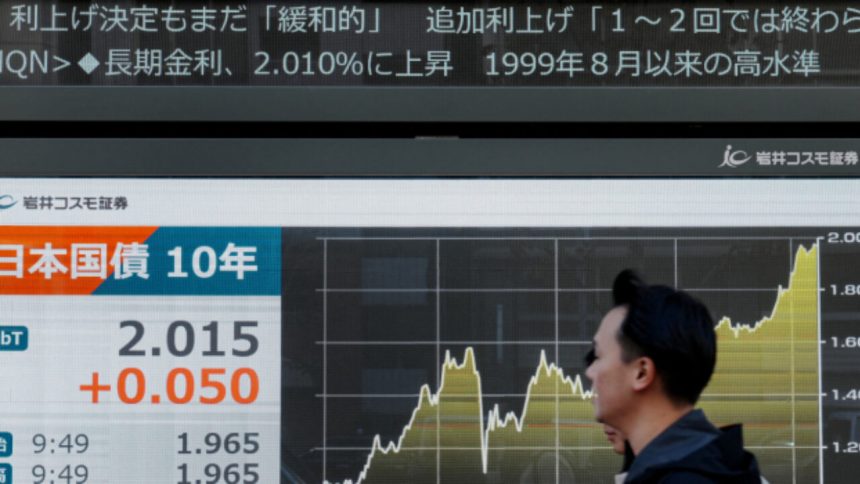
In currency markets, the Japanese yen fell against the US dollar, even after the Bank of Japan (BoJ) raised its key interest rate to a three-decade high.
The move came just hours after official data showed Japanese prices continued to rise above the central bank’s preferred levels, reinforcing the case for tighter monetary policy.
However, the yen’s weakness reflected the widening interest rate differential between Japan and the United States, as traders focused more on expectations of Fed policy rather than domestic Japanese developments.
Market participants said the reaction highlighted lingering doubts over how aggressively the BoJ is willing to tighten policy after decades of ultra-loose monetary conditions.
The latest US inflation data has now become a central focus for investors assessing the Federal Reserve’s next steps.
Teachings from previous Fed meetings suggest policymakers are increasingly data-dependent, and a sustained slowdown in inflation could strengthen the case for gradual rate cuts aimed at preventing an economic slowdown.
While officials have cautioned against premature optimism, traders are increasingly pricing in a policy shift, a development that could have far-reaching implications for equities, currencies, and emerging markets.
Despite Friday’s gains, analysts remain cautious, warning that markets could remain volatile amid geopolitical tensions, uneven global growth, and central bank uncertainty.
However, the combination of easing inflation, resilient corporate earnings, and signs of monetary policy flexibility has offered investors a rare moment of relief.
“If inflation continues to cool and earnings hold up, we could be seeing the foundations of a more durable recovery,” a regional fund manager said. “But markets will want confirmation, not just one good data point.”