President Bola Ahmed Tinubu has renewed his push for the establishment of state police and the full implementation of local government autonomy, urging state governors, leaders of the All Progressives Congress (APC), and other political stakeholders to rally behind the reforms as critical steps toward addressing Nigeria’s security and governance challenges.
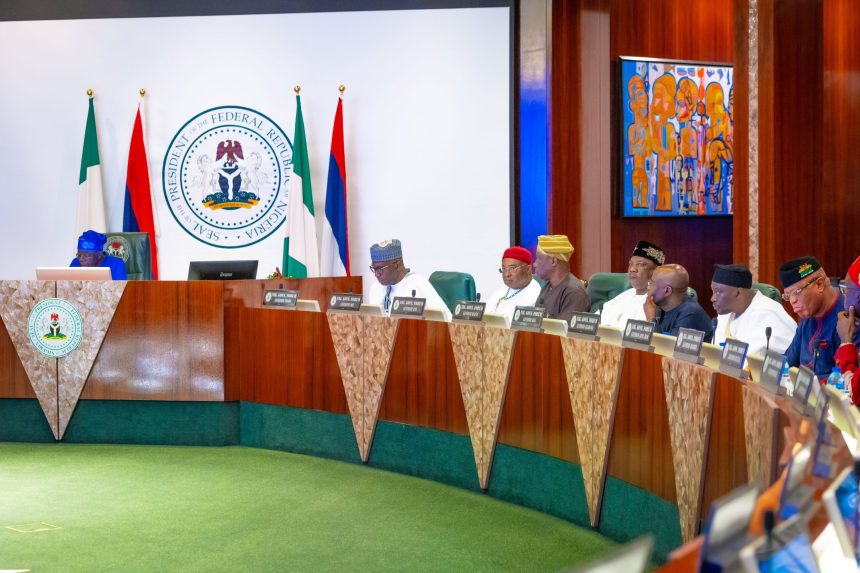
The President made his position clear while addressing top party leaders and governors, stressing that Nigeria’s current realities demand bold structural reforms and collective political will to make them effective.
According to Tinubu, neither state police nor local government autonomy can succeed without the active cooperation and commitment of governors, whom he described as key drivers of governance at the sub-national level.
Tinubu reiterated that the creation of state police remains a priority of his administration, particularly in the face of persistent insecurity across several parts of the country.
He argued that decentralising policing would enhance intelligence gathering, improve response time, and allow security agencies to better understand local dynamics, especially in rural and hard-to-reach communities.
Nigeria currently operates a centralised police system, which critics say has overstretched federal capacity and weakened grassroots security. Tinubu noted that while constitutional amendments would be required to establish state police, the APC-controlled governments and lawmakers have the numerical strength to make it happen.
The President urged governors to set aside partisan and regional considerations and focus on what he described as the national interest, emphasising that insecurity has continued to undermine economic growth, social stability, and investor confidence.
On local government autonomy, Tinubu insisted that the reform must go beyond rhetoric and translate into direct financial empowerment of councils.
He stressed that there can be no real autonomy without direct access to funds, aligning his position with the recent Supreme Court judgment affirming the financial independence of local governments.
“There is no autonomy without a funded mandate,” the President said, noting that councils must receive their statutory allocations directly to function effectively and deliver basic services at the grassroots.
Analysts say the President’s stance represents a significant departure from past practices, where local government funds were often controlled through state joint local government accounts, limiting the capacity of councils to operate independently.
Tinubu appealed to governors and party leaders to demonstrate flexibility, reconciliation, and accommodation, urging them to remain actively engaged in governance down to the local government level.
He said effective leadership requires understanding the realities in communities, especially rural areas where insecurity, poverty, and weak infrastructure are most pronounced.
“You must get involved in whatever is happening in your various states, up to local government level,” the President said, adding that national development would remain elusive without strong grassroots governance.
The President disclosed that he had held discussions with international partners, including the United States and the European Union, where he assured them of Nigeria’s commitment to establishing state police as part of broader security sector reforms.
According to Tinubu, the conversations underscored global interest in Nigeria’s stability and the need for homegrown solutions to security challenges.
“They asked me if I’m confident, and I said yes. I have a party to depend on,” the President said, expressing confidence that the ruling party would provide the legislative backing required for constitutional changes.
The renewed push for state police and local government autonomy is expected to intensify debate within political circles, civil society, and the wider public.
Supporters argue that both reforms would strengthen federalism, deepen democracy, and improve service delivery. Critics, however, have raised concerns about potential abuse of state police by governors and the capacity of local governments to manage funds effectively without stronger accountability mechanisms.
Despite the concerns, governance experts say Tinubu’s insistence signals a clear reform direction, placing pressure on governors and lawmakers to either support or openly oppose changes that have long featured in national discourse.
For state police to become a reality, the National Assembly must pass constitutional amendments, followed by approval from at least two-thirds of state Houses of Assembly. Similarly, effective local government autonomy will require strict enforcement of existing laws and judicial pronouncements.
As Nigeria grapples with insecurity, economic pressures, and demands for better governance, the success or failure of these reforms could define Tinubu’s legacy and reshape the country’s federal structure.