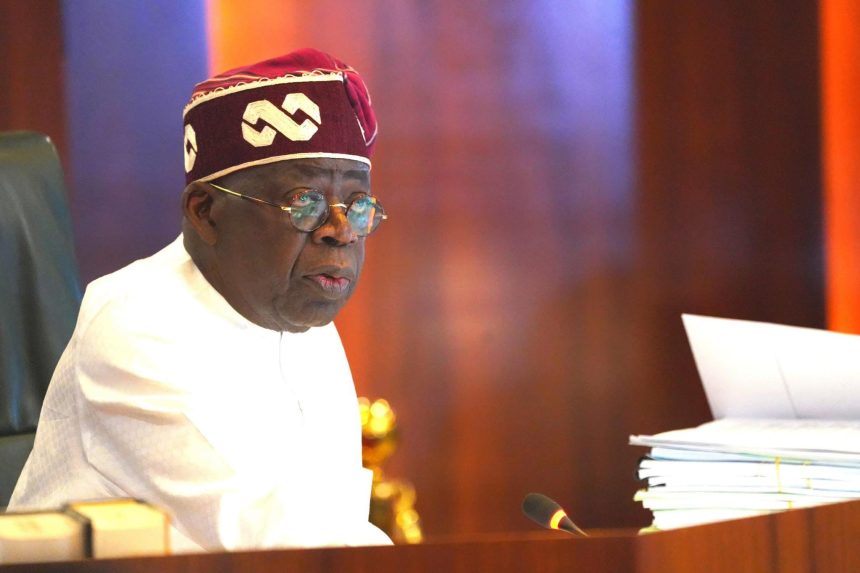
President Bola Ahmed Tinubu has formally requested the approval of the National Assembly to consolidate the 2024 and 2025 federal budgets, a move aimed at strengthening fiscal coordination, improving capital project execution and addressing implementation gaps caused by revenue and timing constraints.
The request was conveyed in a letter transmitted to both chambers of the National Assembly and read during plenary, according to lawmakers familiar with the development. The President explained that the proposed budget consolidation is designed to ensure continuity of government programmes, optimise limited resources and prevent the abandonment of critical capital projects across key sectors of the economy.
According to the Presidency, the consolidation of the 2024 and 2025 budgets would allow the Federal Government to align ongoing projects, streamline spending priorities and reduce inefficiencies associated with overlapping fiscal cycles.
Nigeria’s fiscal space has remained under pressure due to fluctuating oil revenues, rising debt service obligations and increased spending demands following fuel subsidy removal and foreign exchange reforms. The Tinubu administration believes that merging budget implementation frameworks could help ministries, departments and agencies (MDAs) deliver better value for money.
Officials say one of the major drivers of the request is the need to fast-track capital project execution, especially in infrastructure, health, education, power and transportation.
Over the years, Nigeria has struggled with low budget performance, with many capital projects either delayed or rolled over due to late budget passage and revenue shortfalls. By consolidating the two fiscal years, the government hopes to reduce administrative bottlenecks and improve planning certainty for MDAs.
Lawmakers were told that the proposal does not abolish legislative oversight but instead seeks a structured framework that allows projects approved in the 2024 budget to continue seamlessly into 2025 without disruption.
Following the reading of the President’s request, the leadership of the National Assembly referred the matter to relevant committees for detailed consideration.
Some lawmakers have welcomed the proposal in principle, arguing that improved fiscal coordination could reduce waste and improve outcomes. Others, however, have urged caution, stressing the need to preserve transparency, accountability and the constitutional power of the legislature over public finance.
Analysts say debates are expected to focus on how the consolidation would affect budget reporting, appropriation timelines and oversight mechanisms.
Public finance experts note that budget consolidation, if properly structured, could help Nigeria address recurring problems such as underfunded projects, abandoned contracts and inefficient cash releases.
However, they warn that success will depend on clear implementation guidelines, strict adherence to appropriation laws and realistic revenue assumptions. Without these safeguards, consolidation could complicate fiscal monitoring and weaken accountability.
The move also aligns with broader efforts by the Tinubu administration to reform public finance management, boost non-oil revenue and stabilise the macroeconomic environment.
Reactions to the proposal have been mixed. Some economists argue that the approach reflects pragmatic governance in a challenging economic climate, while civil society groups insist that citizens must be fully informed about how consolidated budgets would be implemented and tracked.
Business groups have also called for clarity, noting that predictable fiscal planning is critical for investor confidence and economic growth.
President Tinubu’s request to consolidate the 2024 and 2025 budgets marks a significant moment in Nigeria’s fiscal management debate. As the National Assembly considers the proposal, the outcome is expected to shape budget implementation, project delivery and public finance governance in the years ahead.
Whether approved or amended, the decision will have far-reaching implications for economic stability, development planning and legislative oversight in Africa’s largest economy.